
Floss Your Feet-Step 1
As I mentioned in PART 1 of this article series, I used to work with runners and worked at NY Running Company at the Time Warner Center at Columbus Circle from 2012-2014. On the wall were these little green spiky balls called Foot Rubz. And while they were part of the store’s inventory, the other sales reps had no idea how to use them, so they just sat there on a hook.
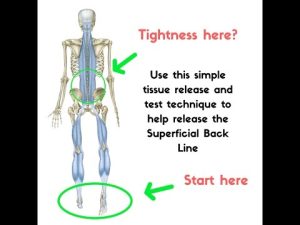
Having an understanding of functional fascial anatomy I would often use them on a customer who complained of chronically tight hamstrings. The hamstrings are part of the same fascial line (known as the superficial back line). As you can see from the image below, this fascial line begins on the bottom of the foot (plantar fascia) and travels up through the back of the leg (calves/hamstrings) into the hip, up the spine and ends up at the bottom of the skull. Tension along any point can affect movement at points higher up on the chain.
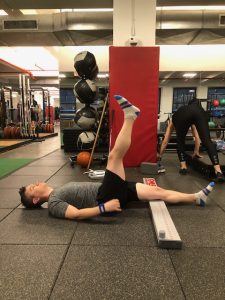
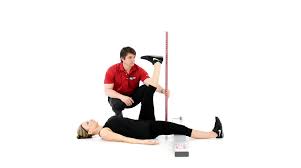
I would have them perform an active range of motion test known as the Active Straight Leg Raise Test (which comes from the Functional Movement Screen). See how it’s performed in the video below.
In most cases, the runner would fail this test and not be able to get their ankle past that vertical stick. Not even close.
Now comes the magic.

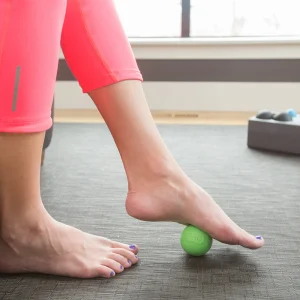
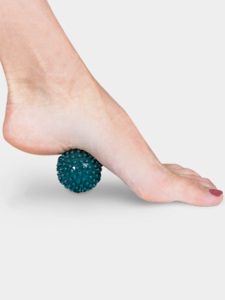
I would have them spend a few minutes massaging the bottom of each foot using the foot rubz ball as you see Dr. Emily Splichal demonstrating in this video.
Guess what happened? Well, in most cases they would either pass the re-test outright or make a significant improvement. Then I would get this look of amazement and they would ask me, “How did you do that”?

As Neil deGrasse Tyson would say, “Science“.
How Does This Help Golfers?
The short answer is that it will help increase elasticity and mobility up the chain from the foot/ankle to the hip and with movement training, the golfer can hinge from their hips at address. The hip hinge is the starting point for any good golf swing.
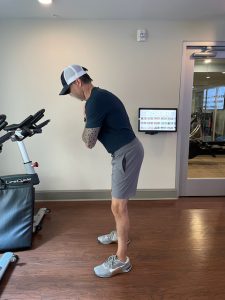
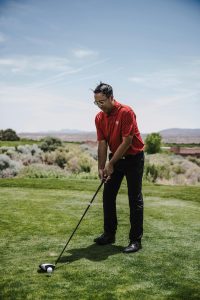
This test directly relates to your ability to create a posterior shift in the pelvis to HINGE YOUR HIPS. Those who cannot HINGE from their hip will BEND from their spine
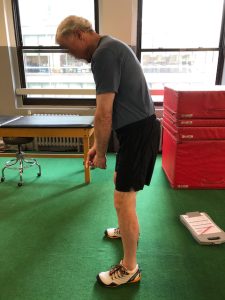 An inability to hinge your hips often results in a C-posture at address.
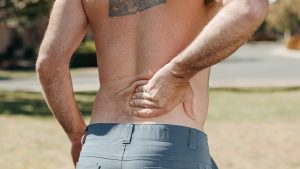
If you cannot bend or hinge to address the ball, one tends to round the spine as a substitute pattern. When you round you lose rotation of the upper body and since the body will find the path of least resistance, that rotation is often compensated for in the lumbar spine. (BACK PAIN)
We want to see the golfer demonstrate a good hip hinge or forward bend. This range of most is important for golfers because restriction in hip hinge mechanics can lead to poor address and dynamic posture.
End of PART 2