

The gym can be an overwhelming place (there’s a lot of stuff there), and the terms used in a gym can be like learning a foreign language. In PART 1 of this article series, the focus was mainly on terminology related to resistance training and some of the equipment used for that purpose. In PART 2, I will focus on terms related to conditioning. Having an understanding of some basic fitness terms can help you make sense of your workout.

The layman’s term for the following forms of Cardiovascular training is simply “Cardio”, which refers to any exercise in which your heart and lungs are involved. That’s pretty much any exercise. What people are thinking is that “Cardio” gets you out of breath. This is not always the case. Let’s explore.

* Aerobic exercise: The word aerobic, on the other hand, denotes a state or intensity at which you do cardio. All aerobic exercise is cardio, but not all cardio is aerobic. Aerobic literally means “living in air” and refers to the use of oxygen to adequately meet energy demands during exercise via aerobic metabolism. In layman’s terms, aerobic exercise is done at a relatively low to moderate level of intensity. They get you breathing deeply but don’t get you out of breath; it is steady state or non-stop; and they use the biggest muscles in the body (e.g. buttocks, legs, back). Examples: Running, cycling, rowing.

* Anaerobic exercise: Anaerobic exercise is intense enough to trigger an energy system that leads to greater performance in short-duration, high-intensity activities, which can last for a few seconds up to about 2 minutes. NOTE: Most, if not all, team sports have a high anaerobic component which puts stress on different energy systems than aerobic exercise does. Therefore adaptation of the muscles to aerobic training is in direct opposition to the primary needs of most athletes.

* Interval Training: Interval training is nothing more than a method of exercise that uses alternating periods of work and rest. The longer the work interval the shorter the rest period is as a percentage of that interval. Studies show that interval training develops aerobic capacity better than aerobic training.
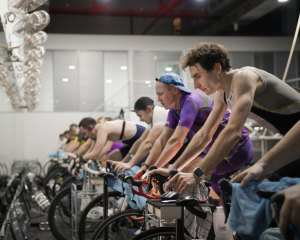
* High-Intensity Interval Training: (a.k.a HIIT) Intensity means you are working hard! High Intensity means you are working even harder, so the intervals are relatively short here. Usually 60 seconds or less. Interval training stresses not only the energy system but also the muscular system. HIIT interval training is hard. HIIT training is uncomfortable. But that’s what it takes to make changes in the body. Getting out of your comfort zone and into the unknown. It pushes your heart and lunges to work harder than they’re used to, and it delivers faster results than if you were to continue to move at a continuous pace as in aerobic training.

* Tabata training: Dr. Tabata used a unique protocol of twenty-second work to ten seconds rest, done in seven or eight bouts. This was a series of twenty-second intervals performed during four minutes. A true Tabata is very difficult to do because it requires a certain level of fitness to even attempt it; since it requires an all-out effort. Working as hard as you can for the entire interval period. If you can perform Tabata’s the results show the 20/10 protocol improved the VO2 max and the anaerobic capabilities more than a steady state program.

Brett’s Bottom Line:

When it comes to corporate gym culture, you pretty much see two things going on: 1) Strength training (most often done body-builder style), using machines or cables to ‘isolate’ a muscle or muscle group. Guys still talking like, “Today is back and bi’s”. Dude, the 80s are so over! 2) “Cardio”, done in a steady-state format, in other words, aerobic exercise, typically done on a treadmill or elliptical trainer.

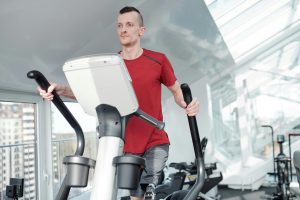
This type of cardio is easy and comfortable, (not that there’s anything wrong with that).
Sometimes you need to get comfortable with being uncomfortable. Challenge your body and your mind.

If you’re not getting the results you’re after in the gym, change what you’re doing. Doing the same thing over and over again and expecting a different result is, by definition, insanity.
Brett Cohen is the founder of Golf Fitness Charlotte, a fitness & wellness company located in Charlotte, NC. He holds a Bachelor’s Degree in Education, is a C.H.E.K Institute Exercise Coach, a Holistic Lifestyle Coach, a Golf Performance Specialist, a TPI Golf Level 3, a National Academy of Sports Medicine Personal Trainer, as well as a Functional Aging Institute Senior Fitness Specialist.