Introduction:
Tales of a Fountain of Youth have been recounted in writings across the world for thousands of years. It seems humans have always been fascinated with delaying the aging process and the possibility of living forever.

The legend became particularly prominent in the 16th century when it became attached to the Spanish explorer Juan Ponce de León, the first Governor of Puerto Rico. Ponce de León was searching for the Fountain of Youth when he traveled to what is now Florida in 1513. But the fountain of youth still remains a mystery.
As much as eternal youth is not a reality, aging does not need to be a catastrophe waiting to happen. I think our society is stuck on some very damaging misconceptions about aging. Never before in history has a society so rejected aging. We are so enthralled with youth culture and so invested in an effort to deny or reverse the aging process, yet more of us are falling into this category every day. Currently (as of 2025) there are 76,000,000 Americans who were born between 1946-1964 (myself included), and 1 joins our ranks every 7 seconds!
There are very practical steps we can take to live long and live well and have the shortest period possible of decline and disability at the end of life. The purpose of these articles is to explain just a few ways to lay the foundation for a long and healthy life.
“Don’t just live long, live well.”

Why Do We Age?
Because everything ages. This is the law of the universe. Everything in the universe ages: animals, plants, stars, and planets. This is the order of nature. Once we accept the fact that we can’t control Father Time and Mother Nature, everything gets a little easier. If you set your goal on anti-aging you put yourself in opposition to nature. Instead of thinking about aging, set your goal on youthful living.
Youthful Living
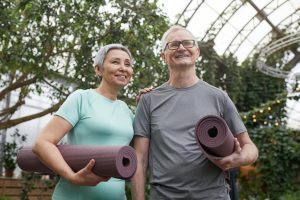
We see as people get older, especially as they get past 60 and beyond, large categories of disease become more frequent. The big ones: alzheimer’s, arthritis, cardiovascular disease, cancer, dementia, diabetes and sarcopenia.
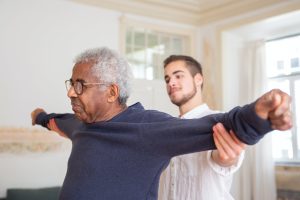
They are the big categories of diseases that shorten life prematurely and/or can make the latter part of life unhappy or miserable. They can also cause a great deal of disability as well as premature death. The question is, are these diseases a necessary consequence of the aging process? I think the answer to that is clearly no!
While genetics does play a role in how long we may live, I don’t think it’s as much as most people think. YOU have a lot of control over your environment and the lifestyle factors that keep you healthy. As the director of the National Institute of Health, Dr. Francis Collins, famously stated, “Genetics loads the gun and environment pulls the trigger.” Genetics can cause us to be predisposed to developing a certain disease, but it is our behavior that ultimately determines our path.
Even though we cannot STOP the aging process it doesn’t mean we have to voluntarily SLOW DOWN and let it catch us either. Though aging is inevitable, I do believe that we should be diligently working to reduce or eliminate the age-related conditions and diseases that are associated with it.
“Aging is inevitable, getting old is optional.”__Brett Cohen
So what will ultimately determine how you will age? You will. Not your parents. Not random luck. You. The decisions you make on a daily basis will predominantly dictate how well or poorly you age. The foods you eat, the activities you engage in, the supplements you take, the environment you live in, and the lifestyle you choose to lead. These will determine how productive, healthy, and enjoyable your future years will be.
“The diseases we look at as inevitable parts of aging, they’re just not! They are not inevitable. They are a product of our lifestyle. Forty percent of the risk for dementia is due to lifestyle. We have the ability to modify our risk in really big ways by altering the way we live.” __Dr. Daniel E. Lieberman, Harvard Professor
If you follow the strategies outlined in this report you will not only feel better but you’ll look better and move better. When you move better you get to spend more time doing the things that bring your life meaning and joy; traveling, dancing, playing with your grandchildren. Plus, by following the strategies outlined in my report, no matter how long you end up living it will be with fewer medical problems and discomfort. After all, what’s the point of living longer if those last 10-20 years of your life are filled with pain and discomfort?
My approach to fitness and wellness is holistic. Meaning I cover multiple aspects that have an impact on your fitness and well-being; Mindset, Movement, Recovery, and Nutrition. This is the holistic approach to fitness and wellness that has worked for me and so many of my clients. I’m confident it will work for you too. At the end of the day, it’s all about the choices we make. There are better choices than others. Do the best you can.
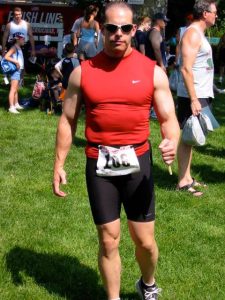
 Peter at age 78
Peter at age 82
“Life is a cruel teacher, especially as you age. By the time you turn 60, you realize something unsettling. The support system you once took for granted may no longer be there in the way you imagined. Your children may have lives of their own. Your parents are likely gone. Even your friends may have drifted away, caught up in their own challenges, so if you’re counting on family alone to carry you through the later years, I have news for you. That’s not enough. But despair not, because while the illusion of dependency fades, a new truth emerges. There are five foundational pillars you must build for yourself. Five pillars, that if cultivated early and maintained diligently, will sustain you through life’s inevitable storms. These aren’t abstract ideas, they are practical, fundamental truths about being human. Your health is your fortress. It’s the foundation upon which everything else in your life rests. By the time you reach 60, this truth becomes starkly clear. In youth, you can afford to take your body for granted, bouncing back from poor sleep, unhealthy meals, or the recklessness of living like you’re invincible. But as the years pile on, the cumulative consequences of those choices become unavoidable. What you neglected then can come back to haunt you now. And the cost of poor health grows exponentially with age. The reality is simple, yet profound. If your health collapses everything else begins to crumble. Your independence, arguably one of the most precious aspects of a fulfilling life, is tethered to your physical well-being. Without it, you’re left relying on others, not out of choice, but out of necessity. That’s a vulnerable position to be in, one that erodes not only your autonomy but your sense of dignity as well. Yet, the good news is that it’s never too late to take charge of your health. Even at 60, there’s a significant difference between simply existing and thriving, and that difference is determined by how much effort you’re willing to put into maintaining your body and mind. The first step is acknowledging that your body is not a machine built to run indefinitely without maintenance. It needs care, attention, and deliberate effort to keep functioning optimally. This means embracing a disciplined approach to exercise. Regular physical activity is not just a luxury, it’s a necessity. You don’t need to become an Olympic athlete, but you do need to move daily, consistently, and intentionally. Walking, stretching, strength training, or swimming, can all help maintain your mobility and prevent the stiffness that often accompanies aging. Movement keeps you connected to life. It’s an assertion of your vitality in a world that might expect you to slow down or step aside. Nutrition plays an equally critical role. At 60 your body is less forgiving of indulgence. Junk food, excessive sugar, and processed meals can lead to chronic conditions, like diabetes, heart disease, and joint problems that rob you of energy and vibrancy. Eating well is not about restriction, it’s about nourishment. A diet rich in Whole Foods; vegetables, fruits, lean protein, and healthy fats gives your body the tools it needs to heal, sustain itself and keep disease at bay. And let’s not forget sleep. Sleep is often dismissed as a passive activity, but it’s one of the most powerful ways to recharge your body and mind. Restorative sleep helps repair the wear and tear of daily life, supports your immune system, and sharpens your mental clarity. Ignoring its importance is akin to running a marathon without ever stopping for water. Ultimately, taking care of your health is an act of self-respect. It’s an acknowledgment of your responsibility to yourself and to those who care about you. Because while no one can guarantee perfect health, the effort you put into maintaining it can make all the difference between a life defined by limitations and one filled with possibilities and independence.”__Jordan Peterson
END OF PART 1
Brett has been certified as a Functional Aging Fitness Specialist and NASM Senior Fitness Specialist since 2014.