

Quick Rewind

In PART 1 of this article series, I explained the origins of the Running Industry as well as the high rate of injury amongst those who train for long-distance events, such as a marathon or beyond.
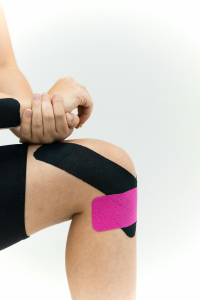
Remember the #1 Predictor of Non-Contact injuries in running is previous injuries (regardless of how you got them).
REASON NUMBER 2 – Structural Make-up (your body make-up is not best suited for long-distance running)
The number 2 predictor of non-contact injury in runners is structural make-up. What do I mean by that? OK, here’s my most basic analogy.
If you’re a Road Runner, your “heroes” are the best distance athletes in the world. You know, the guys and gals you see on the covers of Runner’s World Magazine every month.
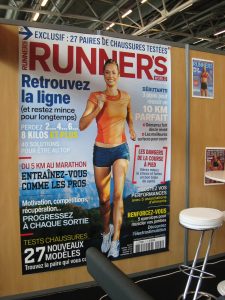

What’s interesting is that these athletes are structurally optimized for endurance sports. The men and women on the covers look virtually the same. Long legs, narrow hips, scrawny arms, small buttocks, and, in the case of females, small breasts. This is in stark contrast to the body type you will see with sprinters and short-distance runners.


Sprinters, on the other hand, have large glutes, thick thighs, wide shoulders and chest, along with well-defined arms.
In other words, not all runners are created equal!

This is a greyhound. Long, lean, built for speed.

This is a British Bulldog. Short, stubby, built for sitting around and slobbering on itself.

They are both dogs.
No amount of running will turn the Bulldog into a Greyhound!
If you force the Bulldog to run long distances, it will break down quickly because it’s not biomechanically efficient.
Most average runners (male and female) are not biomechanically efficient, yet they run incessantly anyway.

REASON NUMBER 3 – Muscle Imbalances-Unaddressed Biomechanical Flaws
The number 3 predictor of non-contact injury in runners is muscle imbalances and unaddressed biomechanical flaws.
These are typically first-world problems. They are a direct result of our sedentary society and the fact that most people are spending the majority of their day (for decades and decades) in a chair and behind a desk.


From cradle to grave.
This environment has a negative impact on your posture.
In the upper body, the front of the chest becomes short and tight, the head drifts forward, and the shoulders become restricted in their range of motion.

In the lower body, the hip flexors and lower back muscles become short and tight, while the abdominals and the glutes become long and weak.

Over time, these postures will alter the length-tension relationship between the muscles in the front of the body and those in the back, as well as alter the position of the joints they cross.
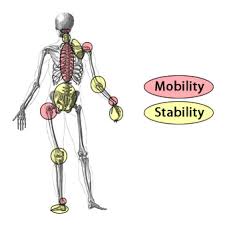
These altered postures, known as Upper Cross Syndrome and Lower Cross Syndrome, were named and defined by the famous Czech Republic therapist Dr. Vladimir Janda.
- Structural make-up + Muscle imbalances = Movement Inefficiencies
- Movement Inefficiencies + Poor Conditioning + Training Volume = Mechanical Breakdown and Injuries!
END OF PART 2-See you in PART 3