
Everybody Poops! However, many people struggle with this fundamental biological function.

In my Health History intake form, I ask this simple question: “Do you suffer from constipation?” (defined as less than 3 bowel movements a day). It’s astounding how many people answer yes to that question.

The answer to that question is directly connected to a few other questions I ask: “Do you experience digestive problems, and do you often feel bloated”?

The answers to these questions are consistent with clients who experience low back pain. How? I’ll explain later in this article.

What Constitutes Constipation?
Definitions vary, but most natural-path physicians would agree on this:
- You should be moving about 12″ of feces per day. It could be with one 12″er, 2 – 6″ers, or 3 – 4″ers. (Don’t be whipping out your ruler, a guesstimate will do)..
- Movements are hard to pass (a sign of dehydration).
- You may notice you have a pooch below your belly button. Go ahead, take a look in the mirror. If you’re walking around with a pouch that rivals a Kangaroo, you’re likely constipated. Constipation can cause the large colon to become enlarged and heavy. If the abdominal wall is not strong enough to support it, the colon, liver, and stomach begin to droop.


Ideally, the train should leave the station 3 times a day. An a.m. train, a mid-day train, and a p.m. train. Although bowel transit time (the time it takes for food to travel from mouth to anus) varies from person to person, the first sign of a meal leaving the station should be 12 to 14 hours after it’s eaten.. Therefore, if you are eating breakfast, lunch, and dinner at the same or similar times each day, you should be on a regular schedule..How Often Should You “Go”?
To keep your train running on time, follow these guidelines:
- Proper Hydration: defined as 1/2 your body weight in ounces/day. Adding a pinch of sea salt to each liter of water will increase the absorption rate of the water as well as aid in the production of hydrochloric acid in the stomach.
- Good Eating Habits: Start each day with breakfast. Chew your food thoroughly, almost to a liquid (the first physical act of digestion begins in the mouth and requires the production of saliva, which is water-dependent). Avoid processed foods (they will disrupt the proper function of the digestive process).
- Eat More Fiber: Eating fibrous foods helps keep you satiated and creates stools that are easy to pass.
- Move: Most of you simply need to commit to moving more.. Walking helps pump fluids through the body and encourages elimination, but you want to learn to squat.
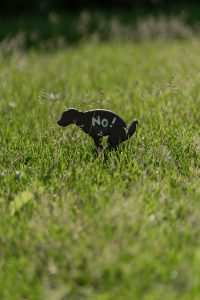
A squat below parallel squat. Not toilet squatting. In a full squat, our intestines get compressed by our thighs, helping to move things along. Like other animals, we were made to poop on the ground, not on a throne..

-
“Too much sitting = not enough shitting”
Oh, What About The Back Pain?
Why do we need to squat deep?


Because that’s where that shit sits?
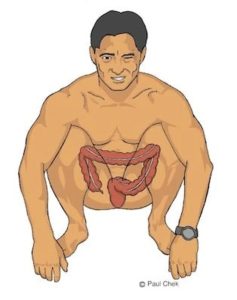
The muscles that stabilize the lower back and the organs of digestion and elimination are fed by the same set of nerves. If you are bloated or constipated, the muscles that support the lumbar spine will be downregulated to prioritize the organs in that region. One of the best defenses against low back pain is to stay hydrated, stay active, and maintain regular bowel movements.


Brett’s Bottom Line:



If the train doesn’t leave regularly, traffic will be backed up. A backed-up colon is a toxic colon.