
The key to developing a good address posture is finding a neutral pelvis. So what does that mean exactly?
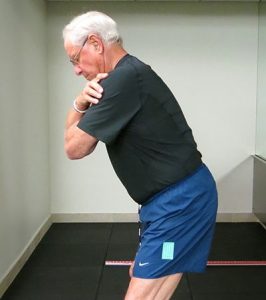
At setup, we would like you to be able to hinge from your hips. This is the foundation of finding a neutral pelvis.
We test the ability to hinge from your hips by using the toe touch test.
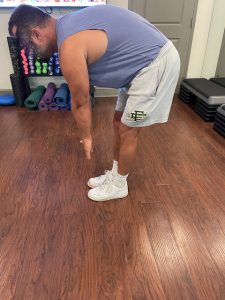
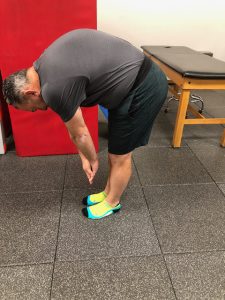
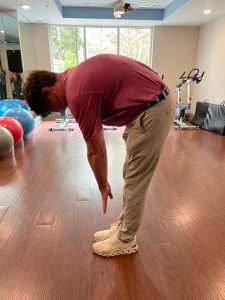
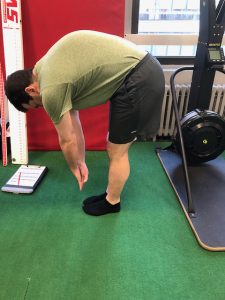
If you struggle to touch your toes, you will likely NOT hinge from your hips and instead, default to rounding the upper back to reach the ball with the club. This is referred to as “C‘ posture at address.
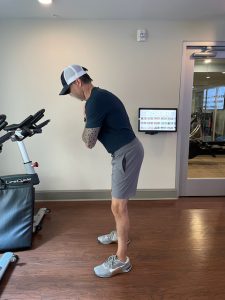
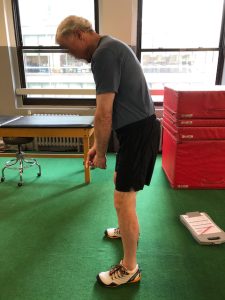
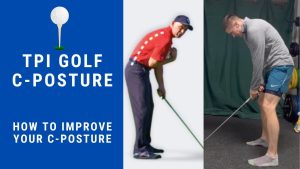
To review, the first step to a good setup posture is to be able to touch your toes so you can hinge from your hips.
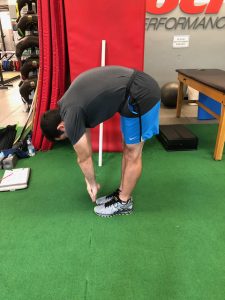
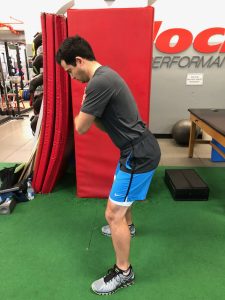
Finding Neutral Pelvis
Once the toe touch and hip hinge are established, we can now train your ability to control pelvic tilt. We look at that ability in what’s known as the Pelvic Tilt Test.

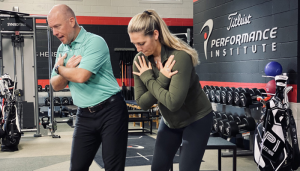
In order to execute this movement efficiently, you need an adequate amount of mobility in the hips and lumbar spine, as well as the ability to keep the rest of your spine/upper body from compensating. This ability is known as dissociation. Can you separate or disassociate the lower body from the upper body without compensation?
For nearly all of you, this will be very challenging. The consolation is, you’re not alone. It’s challenging for players at the highest level, but necessary for great ball striking. (consistency and power).
If you go to the 2-minute mark in the above YouTube video, you will see Dr. Greg Rose ask the golfer to “dump the water forwards and then dump the water backwards” from his mid-iron setup. What you will see is what I almost always see. Nearly no movement at all at the pelvis, or a lot of compensation from the upper body trying to create that pattern.
Watch Dr. Rose demonstrate how to find a neutral pelvis using the water drill below.
https://www.mytpi.com/exercises/#water-drill

If you find this difficult to do, we have found a major body-swing connection that is likely one of the contributing factors to what it is you come to me complaining about in the first place.
- “I’m losing power off the tee.”
- “I want more consistent ball striking.”
Sorry, but if you cannot touch your toes, hinge your hips, and tilt and tuck your pelvis at speed, those requests will elude you.
What Creates a Neutral Pelvis?
The starting position for the golf swing is what industry professionals refer to as a “stacked” position. That means keeping the head, rib cage, and pelvis in a “neutral zone”, where they line up, which allows for efficient rotation in all directions.
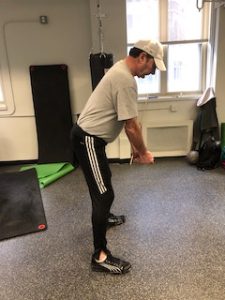
If we see the lordotic curves of the lower back and cervical spine too far in one direction, it will limit the rotational capacity of the pelvis and spine as a whole and cause irritation to the smaller facet joints, causing pain in the long term.
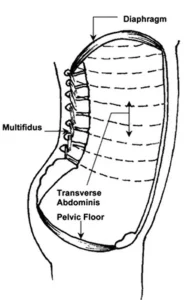 Too much curve in the lumbar spine at address causes the smaller joints to jam when you rotate.
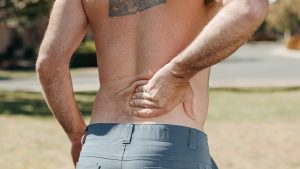
In order to move the pelvis, we need the following muscles to work independently and then interdependently.
- Your glutes

2. The lower fibers of the rectus abdominus.
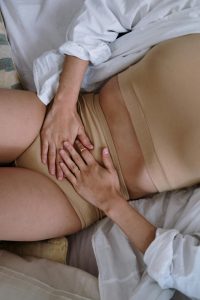
3. The Internal Obliques (which connect your ribcage to the top of your pelvis)

See it in action in the video below.
Brett’s Bottom Line:
If you are struggling with back pain, with inconsistent ball striking, with a loss of power in your swing, if you want to Play Golf Better, I CAN HELP!

You have to be ready, willing and able to commit to yourself and a training program that will help you feel better, move better, and ultimately play better.
“I have been working with Brett for about 5 months, and he has been instrumental in my improved golf related mobility. From the outset of working with Brett, he has consistently demonstrated a mastery of how the body needs to move during a quality golf swing, as well as what mobility improvements are needed to get there. It is clear he has a passion for learning, and more importantly a passion for passing that knowledge on to others. I highly recommend Brett’s services to anyone who is interested in improved golf performance, reduced risk of injury, and greater golf longevity.” __Derek Schlageter