
Do you wake up sore, stiff, and weaker than the day before? If you do, then the advice below should help.

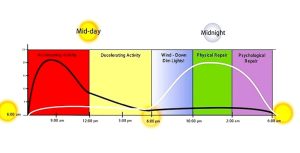
Every night, your body is supposed to enter a 4-hour critical recovery window where your muscles repair and grow stronger. This period of time is typically between 10 pm and 2 am. It’s during this time period that the real magic of restoration takes place. It’s the quiet and dark time when our bodies get a chance to repair and rebuild from the wear and tear of the day. And the more stress you put your body through (both physical and mental), the more critical this time period is to restore tissue damage and bring the nervous system back to homeostasis.


This is just one of the critical lifestyle concepts I learned from Paul Chek more than 20 years ago in his groundbreaking book, How To Eat, Move and Be Healthy.

This book would serve as the foundation for my Holistic Lifestyle Certifications, Levels 1 & 2

Achy & Stiff
There’s a BIG difference between resting and truly recovering. If you want to get the most out of your sleep, you’ve got to set yourself up for success and give your body the tools it needs to repair itself.
Here is a list of things you can and should do to optimize your chances of a good night’s sleep.
- Get regular exercise.

Regular exercise can improve the quality and quantity of sleep. Being physically active can make you feel more tired at bedtime. In addition, exercise can reduce stress levels, making it easier to fall and stay asleep. At a minimum, try to get in those 10,000 steps a day. It goes a long way to improving your overall health.
2. Limit caffeine.

Notice, I didn’t say eliminate caffeine. I love my coffee, especially with breakfast, and I treat myself to an espresso mid-day, typically before 2 pm.
Caffeine has a half-life of about 6 hours. So, if you have a cup of coffee with 300 milligrams at 3 pm, you still have about 150 milligrams floating around your bloodstream at 9 pm. NOT GOOD!
While everyone metabolizes caffeine differently, this can be a real problem for some people. I can tell you that if I have chocolate after dinner, it will light me up as if I were having my first cup of coffee in the morning. It will definitely disrupt my ability to fall asleep on time, so I don’t do it.
If you go to minute 17 in this video interview of Rory McIlroy, you’ll hear him speak of some of the things he does to wake up at his best.
Ideally, don’t drink anything containing caffeine after lunch.
3. Avoid alcohol.

I know many reading this may like a glass of wine with dinner, or grab a ‘pop’ to help them relax and unwind from a stressful day, but by definition, alcohol is a depressant, and it’s also pure sugar. While you may feel like it helps you fall asleep more quickly, alcohol can interrupt your circadian rhythm because it causes a rapid rise in blood sugar levels.
It bypasses the digestive system and gets absorbed directly into the bloodstream through the gut lining. So it will cause a rapid glucose spike and a corresponding insulin response, which will wake you in the middle of the night.

Another reason you don’t sleep well when you drink alcohol is that alcohol blocks REM sleep, the most restorative type of sleep, so you wake up feeling groggy. Finally, alcohol reduces anti-diuretic hormone (ADH), so you may have to get up to urinate during the night.

Hey, I don’t know about you, but I already get up 2 – 3 times a night to pee. Welcome to your 60’s.

We’re not in college anymore.
There’s a lotta more. See you in PART 2