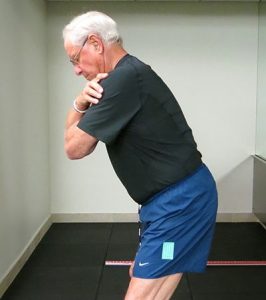
In golf, we aim to establish an address position where the spine is in a neutral position.
What Does “Neutral” Mean?
When I assess a golfer’s static posture at address, I am looking to see if there are any exaggerated curvatures in the spine.
We have 3 options:
- C-Posture (the most common posture I see)
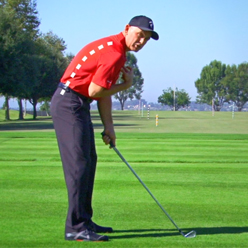
In C-Posture, there is excessive flexion, or rounding of the upper portion of the spine. This is most often the result of an inability to hinge/bend from the hips.
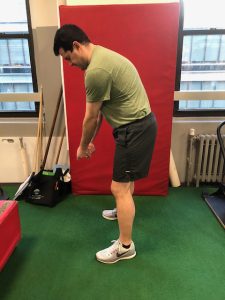
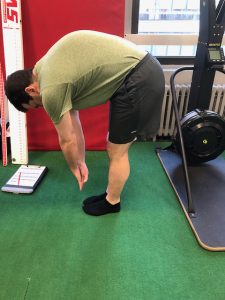
2. S-Posture
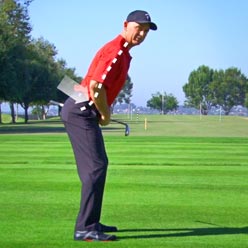
In S-Posture, the pelvis is in excessive extension. Meaning, too much of your butt is sticking out the back side, and the chest and head are too far out in front of the feet. From the side, this looks much like the letter S.
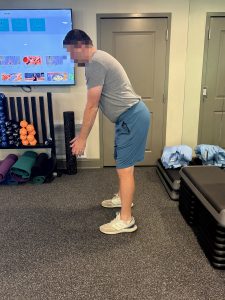
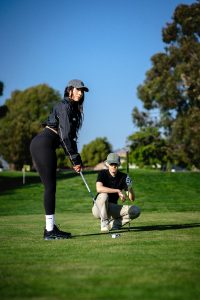
If you have S-Posture and try to rotate into the backswing position, the smaller joints in the lower back will jam together, which will cause irritation, inflammation, and eventually pain in the lumbar spine. It’s not a matter of IF, it’s a matter of WHEN!
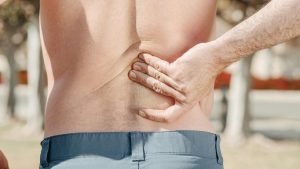
3. If there are no exaggerated curvatures in the spine, then it looks like the letter “I“. I = IDEAL. This is what’s often referred to as Neutral Spine.
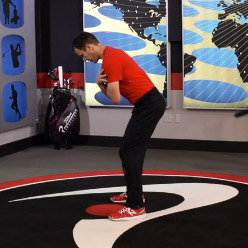

From the side view, the lower ribs would be parallel to the top of the pelvis.
Why Neutral Spine?
The neutral spine address position gives us the best opportunity to rotate the torso.
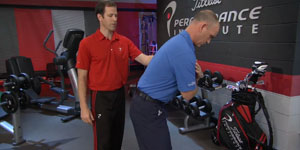
The exercise being demonstrated in the above video is called Arch/Flatten/Arch/Neutral. It takes the entire spinal column through a full range of motion, S to C to S, and finally I.
When we end up in the I position, the head, sternum, and pelvis all line up.
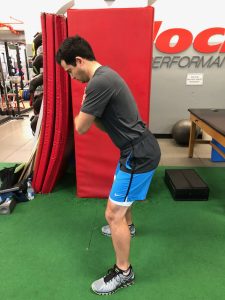
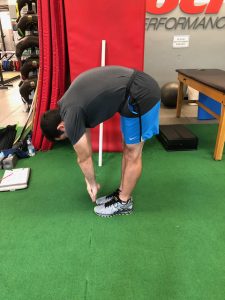
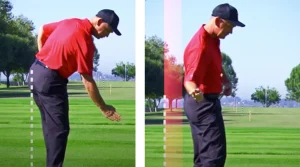
Those golfers who have a neutral spine at address typically can pass the Toe Touch Test. Those who don’t, can’t.
One of the ways we can practice this is by getting on all fours and doing the Cat-Cow exercise from yoga.
This exercise requires spinal mobility and motor control.
The Backswing
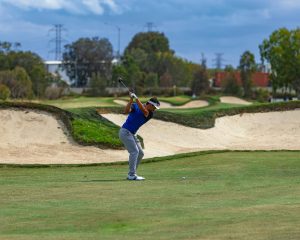
During the backswing, we leave that stacked position momentarily, but we need to be able to come back to it, and even add a bit of trunk flexion (rounding of the upper spine), at the moment of impact.
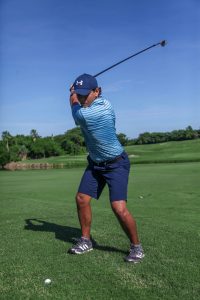
Impact
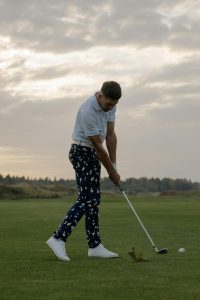
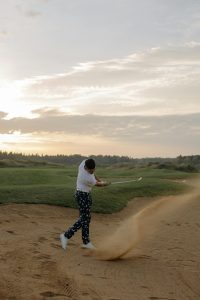
At the moment of impact, better golfers create space between their bodies and the ball. Their pelvis tucks under, and their chest stays down, while the left hip rotates up and back.
What Creates This Position?
What allows you to do this is what amateur golfers often refer to as “core strength”. I hear this all the time: “I need more flexibility and core strength for golf.”
Yes, yes, you do.
You need to be able to activate your glutes.
Your lower abdominals.
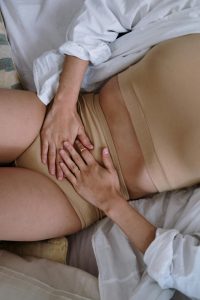
And your oblique abdominals.
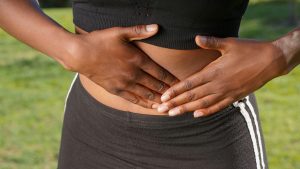
They all need to work in concert with each other, and at speed. Watch the video below as Dr. Greg Rose explains.
Brett’s Bottom Line:
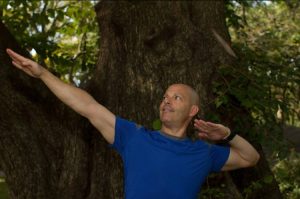
Yep, golf is hard!
Would you like some help with that?
Let’s get started. Despite today’s frigid temperatures, spring is closer than you think.