
“Golf’s an easy game that’s hard to play. It’s even harder when your own body gets in the way!”__Brett Cohen
I’ve been saying this in my articles, lectures, presentations, and here on my website for the past 16 years – because it’s true.
So what exactly does hip mobility mean, why do we need it, and why don’t you have it is what I will cover in this article series.
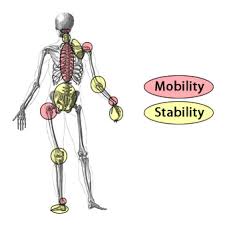
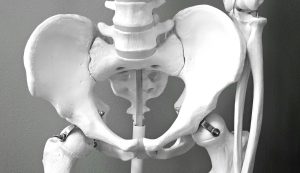
Take a look at this map of the body. You will notice that the hips have a pink circle, as do the other joints and segments that those of us in the exercise and rehabilitation communities call MOBILE joints.
A mobile joint or segment should be able to move freely in three directions or planes of motion.
- Front to Back (Sagittal Plane)
- Side to Side (Frontal Plane)
- Rotational Movement (Transverse Plane) is particularly critical for the sport of golf.
Why You Don’t Have It


From the time you were six until today, you’ve spent approximately 1/3 of your life locked in a chair. We were not meant to spend that much time in a chair. We were designed to walk, run, sprint, bend, squat, push, pull, twist, carry, and so on.
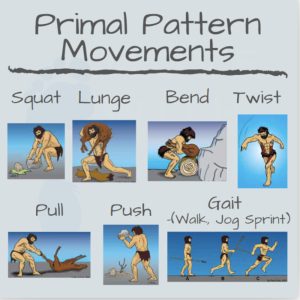
Probably the last time you had hip mobility was when you were a boy, out playing with your friends with reckless abandon.


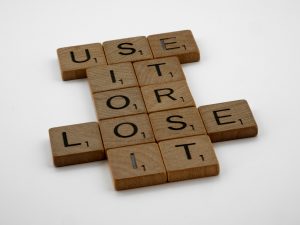
As with all animals, young animals’ play mimics the physical skills they will need to survive as adults. Unfortunately, in modern Western societies, these patterns are lost early in life unless you are doing something to stop it. Use it or lose it.
How We Measure Hip Mobility

Those of us trained by the Titleist Performance Institute measure hip mobility in the following ways.
For Sagittal Plane Mobility, we perform the following physical screens:
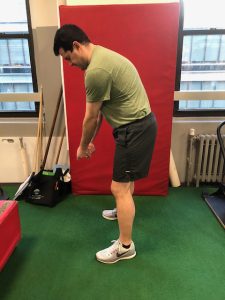
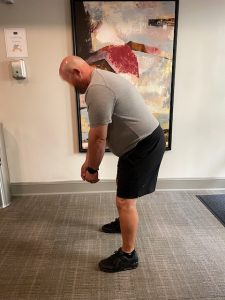
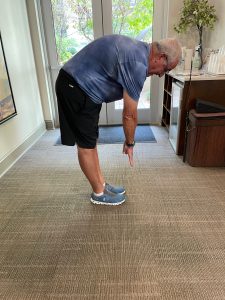
Toe Touch Test
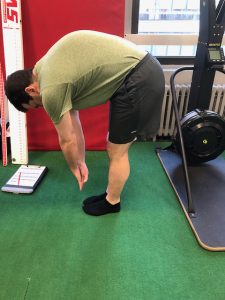
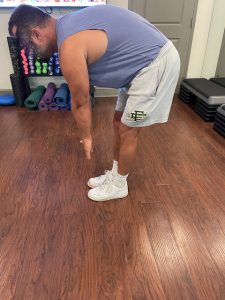
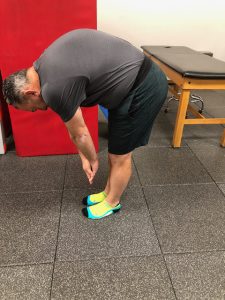
Do you have enough tissue elasticity and joint capsule mobility to push your hips back and out of the way? Most of you do not.
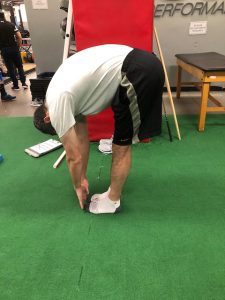
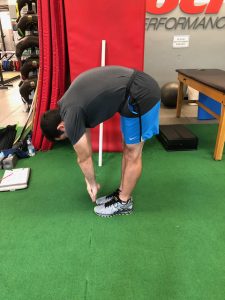
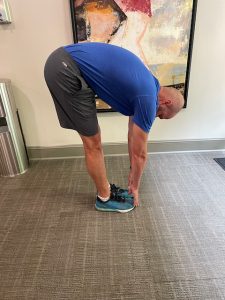
There is an interesting correlation between those who can and those who cannot. Those who can almost always have lower handicaps. JUST SAYIN’
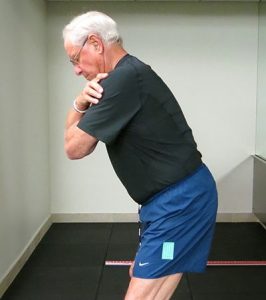
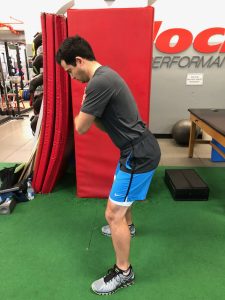
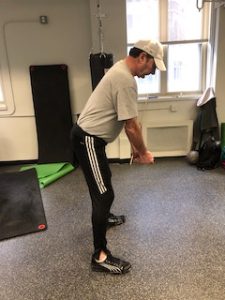
If you cannot, you will not be able to set up to the ball at address with a proper hip hinge and will likely hang over the ball in what we call “C” posture.
See images below.
C-Posture puts you at a mechanical disadvantage to rotate efficiently in your backswing.
Deep Squat Test
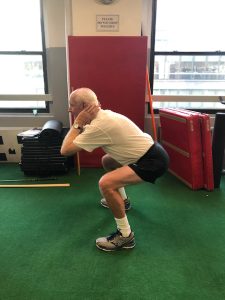
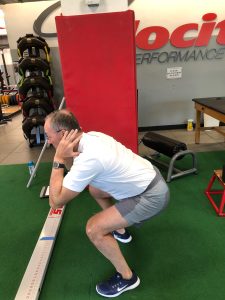
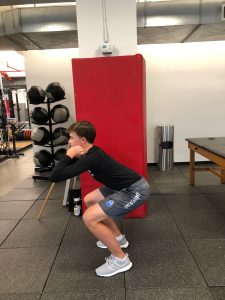
This is actually called The Overhead Deep Squat Test, but for this article, we are just going to focus on the lower body portion.
In the Deep Squat portion of the test, I am measuring Ankle, Knee, and Hip Mobility. All three of these joints need to be able to work together to get your butt below your knees.
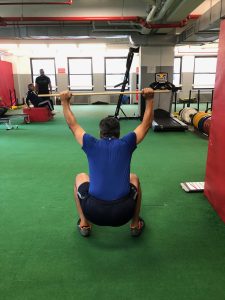
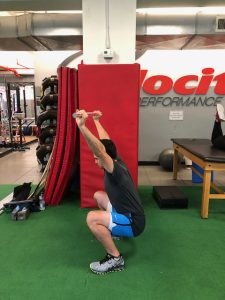
Once again, the correlation to being able to Deep Squat and not being able to was dramatic. The two golfers you see above were the two best golfers I ever worked with, both with + handicaps. Those who can’t are typically double-digit handicap golfers.
Watch how easy it is for PGA Tour Player Hayden Springer to squat below parallel. He demonstrates some right ankle issues, but that’s not preventing him from getting deep. If you want to see just that part, go to 21 minutes into the video, but I suggest you watch all of it. Take it all in.
Pelvic Tilt Test
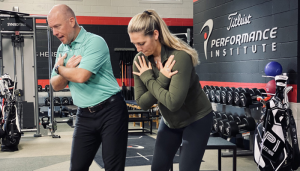
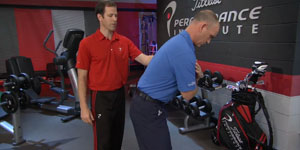
The pelvic tilt test starts from your original mid-iron set-up. This test assesses overall mobility of the pelvis and lumbar spine, as well as the golfer’s ability to control pelvic position throughout the swing.
You are asked to arch your lower back, then flatten it. Or pour the water out of the bucket and then put it back in.

Watch PGA Tour Player Ryan Gerard perform the Pelvic Tilt Test at 12:50 into the video below.
If you watch carefully, he can do it in the correct order, but with a slight vibration or shaking. This shaking can be eliminated by adding core strength and practicing the movement.
The Pelvic Rotation Test – Transverse Plane Mobility
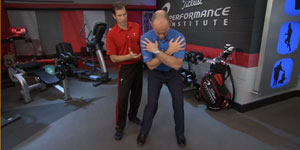
Like the Pelvic Tilt test, the Pelvic Rotation test starts in golf posture. This test assesses a golfer’s ability to rotate their lower body independently of their upper body. A skill known as dissociation. This is crucial for proper sequencing in the downswing and improving consistency, as well as transferring power to the ball.
Watch PGA Golf Coach Piers Ward from Me and My Golf make this look easy peasy at 8 minutes into this video.
Most amateur golfers struggle with this test mightily!
- I have tested countless hundreds of amateur club golfers over the past 16 years, and very few do this well.
- I have found a direct correlation between how much hip internal and external rotation capacity a golfer has and how well they can coordinate it.
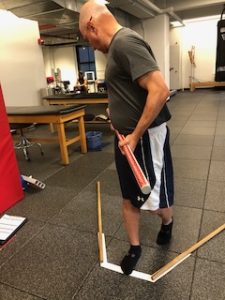
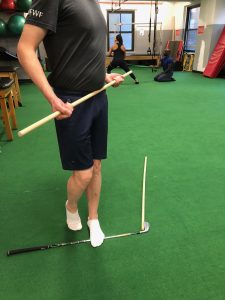
 Lack of internal rotation/backswing.
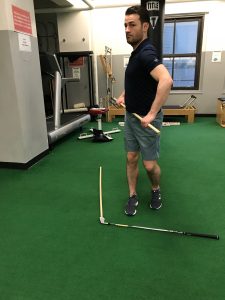
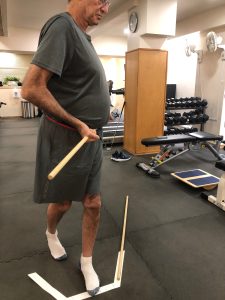 Lack of internal rotation/follow-through.
If you have less than adequate range of motion in internal and external rotation, something we look at in the Lower Quarter Test, I can assure you, you will not pass the Pelvic Rotation test.
Brett’s Bottom Line:
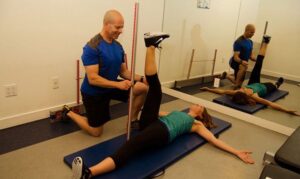
This is the end of PART 1 of this article series. To review, I covered:
- Where you need mobility in the body, this article focuses on the hips.
- Why do you lose hip mobility as you get older?
- How I test hip mobility as it relates to your golf swing.
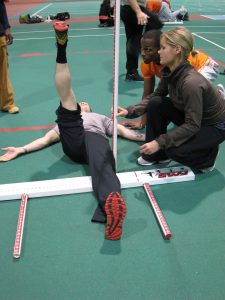 Learning how to do the FMS Straight leg raise test (2007).
In PART 2, I will cover how not passing these hip mobility screens can negatively affect your body and your swing, and my approach to improving mobility so you can use it in your swing.
“You can’t use what you don’t have.”__Brett The Golf Guy