

When someone thinks of the word ‘mobile’, our thoughts automatically go to what I would call the global definition of the word.
“The ability to get from place to place under one’s own power.” __Brett Cohen

In contrast, one who loses mobility has essentially lost their independence and has become dependent on others to get from place to place. In other words, they have become reliant on others to go about the tasks of daily living.
While functional strength plays a crucial role in maintaining your independence as you age, that will be the topic of another article altogether.
How The Body Is Designed To Function
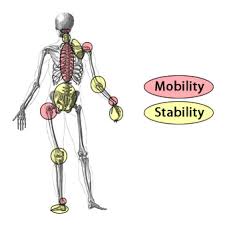
In the introduction, I talked about mobility in the global sense; in this section, I want to talk about mobility in the local sense. Meaning, what joints or segments of the body should be mobile. And by mobile, I now mean the joint or segment was designed to move well in multiple directions. Or what fitness professionals call – three planes of motion.
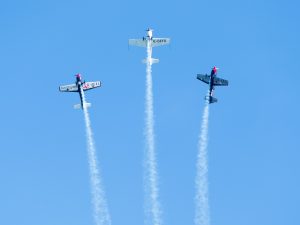
Those three planes or directions are:
- Front to Back
- Side to Side
- Top Half to Bottom Half or Rotation
Why We Lose Mobility

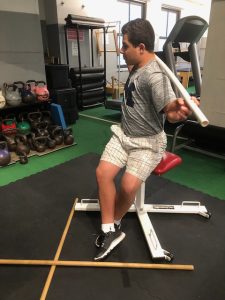
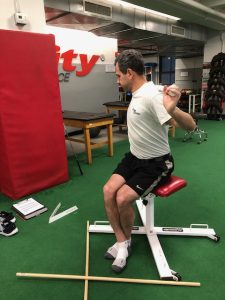
The main reason those of you reading this have lost your mobility is that you have stopped using your body the way it was designed to be used a long, long time ago. Even those of you who “exercise” all the time.
Statistics show that only 10% of you exercise at all, and the ones that do exercise tend to do so in only 1 of those 3 directions.
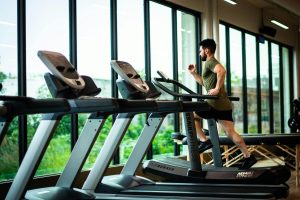
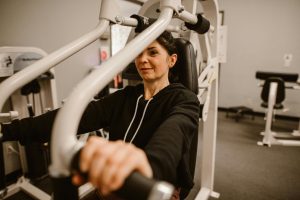
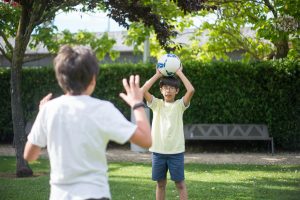
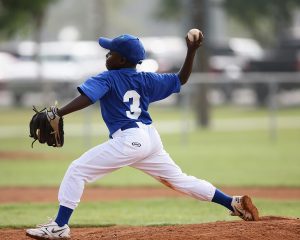
But life and sport take place in 3 directions, all at once.

Movements That Matter
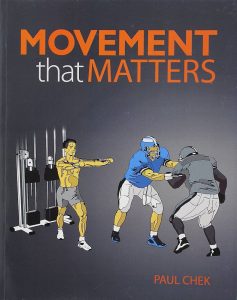
In the early days of my fitness career, I studied with health and fitness legend Paul Chek.
 2012 ECA Fitness Summit
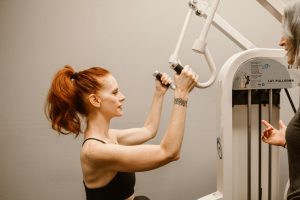
Paul taught us about his Primal Pattern Movement Theory at a time when fixed-axis machines were the go-to for most “fitness professionals”.
 vs.
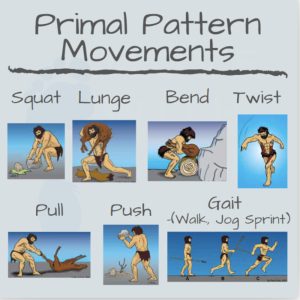
The Primal Pattern Movements are a system of seven fundamental, hard-wired motion types essential for human survival, functional movement, and daily life.
- Squat: Lowering your hips from a high center of gravity with a more upright spine angle.
- Bend (Hinge): Lowering your center of gravity primarily by hinging at the hips.
- Lunge: Stepping and dropping vertically into a single-leg or split stance.
- Push: Moving an external resistance or your body away from a load.
- Pull: Drawing a load or your body toward your center line.
- Twist: Rotating the ribcage relative to the pelvis.
- Gait: The integration of walking, jogging, or running by combining multiple patterns like pulling, lunging, and twisting
Like anything else, if you don’t use it, you lose it. So for the last 25 years of my fitness career, my main job has been to help reverse the negative effects of modern living and help my clients restore their ability to perform these 7 Primal Movement Patterns.
While these 7 Patterns are the foundation of human movement, most of life and sport combine one or more of them.
Local Mobility – Chunking It Down
If our ultimate goal is to perform these seven patterns without pain or compensation, then the joints involved in these patterns need to have sufficient mobility to be used throughout an entire chain, from the ground up. This is referred to as the Kinetic Chain.
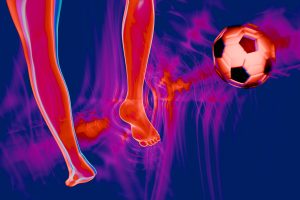
In all standing, upright activities, one joint will influence the other joints above or below it, whether it works properly or not.
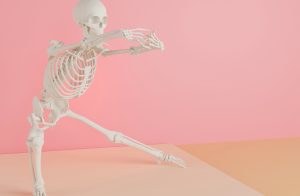
Because the body is a series of interconnected parts, one part will impact the others. This impact can either be positive or negative. Ideally, when the joints incorporated in a certain movement pattern work properly, we see coordinated optimal movement patterns.
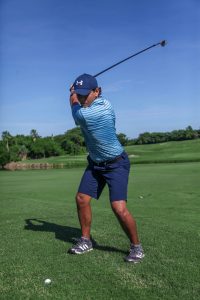
This is why great athletes make difficult things look effortless. In golf, a sport with one of the most unnatural movement patterns, this becomes quite a challenge.
See You In PART 2