
Golf is a whole-body, rotational, power sport. And most of you struggle with both rotation and power.
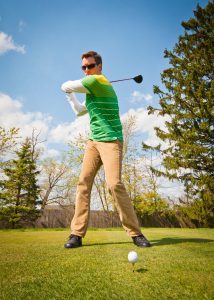
Take a look at the ultimate expression of rotational power.
Now that’s bombing it off the tee!
Let’s find out how he does that.
Where Do You Need To Rotate From?
To be proficient, consistent, and injury-resistant in golf, you need to be able to rotate through the following joint segments:
- ankles
- hips
- thoracic spine
- shoulders
- upper cervical spine
- wrists
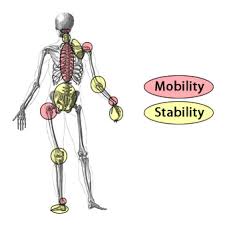
Unfortunately, most of you will struggle with most of those segments.
Bad Hip Hinge Mobility vs. Good Hip Hinge Mobility
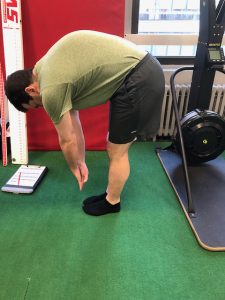
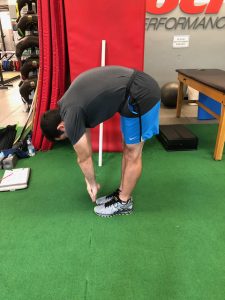
Poor Set-up Posture vs. Good Set-up Posture
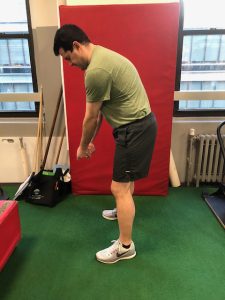 .
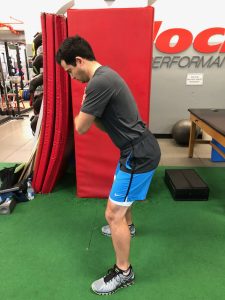
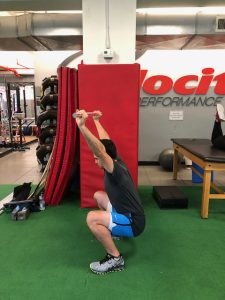
Bad Ankle/Hip & Shoulder Mobility vs. Good Ankle/Hip & Shoulder Mobility
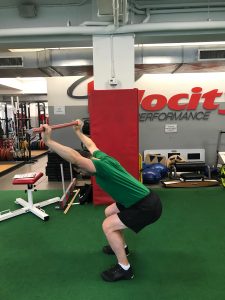
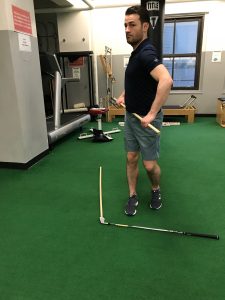
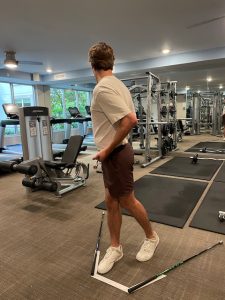
Poor Trail Hip Internal Rotation vs. Good Trail Hip Internal Rotation
How The Body Generates Power
We initiate power by first pushing into the ground with our feet. This is why ankle mobility is so important to good golf. Listen to the GOAT.
Newton’s Third Law of Motion
- If two bodies exert forces on each other, these forces have the same magnitude but opposite directions. In other words, for every action there’s an equal and opposite reaction. So if you want to swing fast, you need to push into the ground with your feet; the ground pushes back with equal force, and then it’s your job to convert that force into rotational power.
The Pelvic Powerhouse
Once you’ve pushed hard into the ground, we need to take that energy through the legs and into the pelvis. Think of the pelvis as the transmission of your car, taking the power of your engine and connecting it to your wheels. If you struggle with either the pelvic tilt or pelvic rotation test, you will find this difficult to do and will typically complain of a lack of power and consistency.
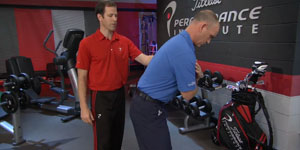
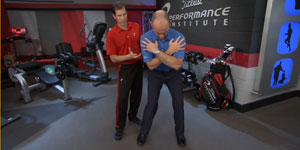
Pelvic Tilt Test Pelvic Rotation Test
Create S.P.A.C.E
S.P.A.C.E is the acronym TPI co-founder Dave Philips created to help golfers understand the importance of keeping the lower body and the core connected on the way to impact. It stands for:
- Speed
- Power
- Accuracy
- Consistency
- Efficiency
In order to maintain space, you need rotational capacity in your hips and the ability to tuck your pelvis under as you move toward the ball at speed. That’s what transfers the energy you got from the ground into the legs and up the chain.
The Thoracic Spine
So far, we have created forces by pushing into the ground and transferred that energy into the legs and core using the pelvic powerhouse. To transfer that energy through the shoulders, lead arm, and club, we need both thoracic extension and rotation.
Bad Hip & Thoracic Extension vs. Good Hip & Thoracic Extension
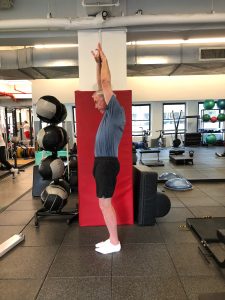 .
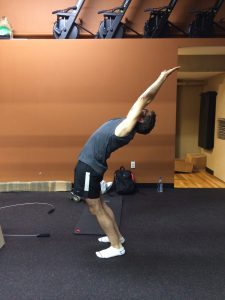
Poor Thoracic Rotation vs. Good Thoracic Rotation
n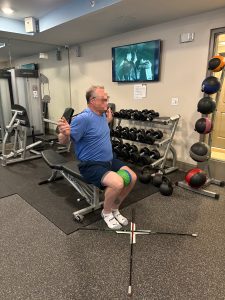 .
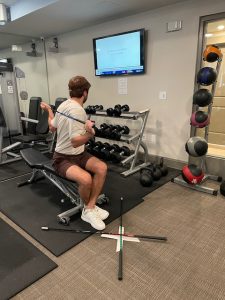
Poor Shoulder Mobility vs. Good Shoulder Mobility
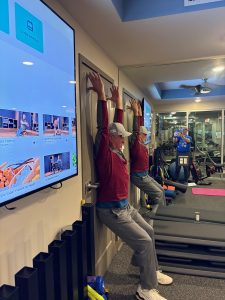
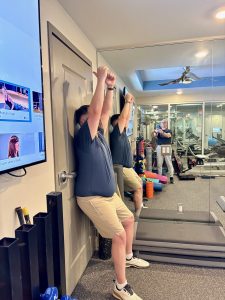 .
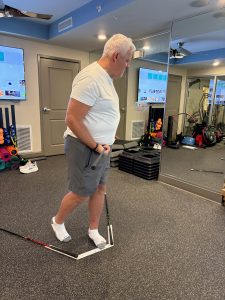
Poor Lead Hip Internal Rotation vs. Good Lead Hip Internal Rotation
 .
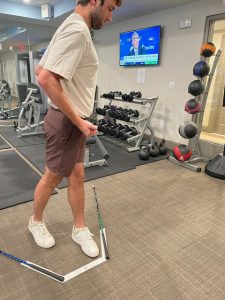
Those of you who struggle with hip and spine extension, poor thoracic rotation, and hip internal rotation to the lead side often look like this at the end of their swing.
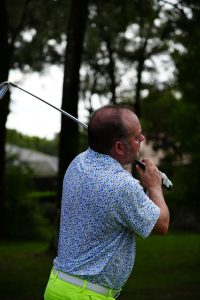
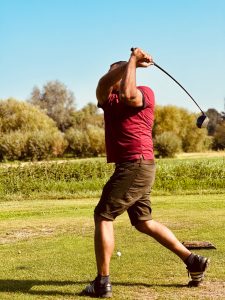
Instead of this.

If you’d like help rotating, drop me a line. I’m here to help.
Brett