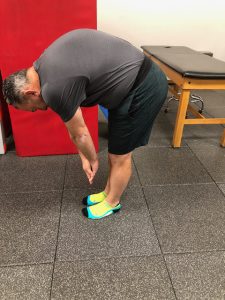
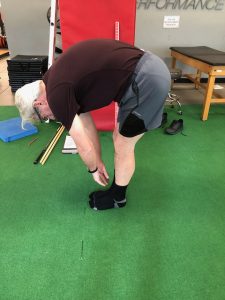
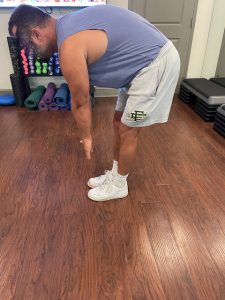
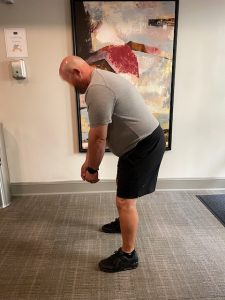
As you can see from the photos below, most amateur golfers cannot.
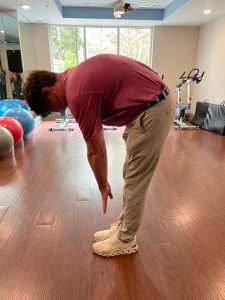
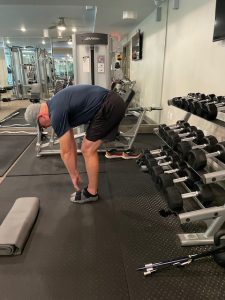
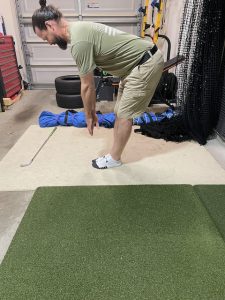
Since becoming TPI Certified in 2010, I’ve screened hundreds of golfers just like you and I can say with confidence that nearly 90% of you cannot touch your toes.
Why does it matter to golf?
Those of us who are TPI Certified test Toe Touch as one of the 15 movements we look at in the Level 1 Screening process.
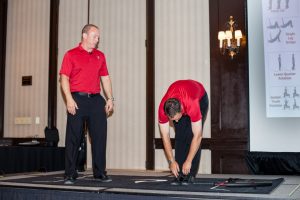
The objective of the toe touch test is for overall mobility in the lower back and hamstrings, plus it can help identify a hip problem versus a lower back/core limitation. This test is directly related to the pelvic tilt test, as you need to create a posterior shift in the pelvis to hinge your hips. Those who cannot HINGE from their hip will BEND from their SPINE.
Can vs. Can’t
Golfers who can touch their toes tend to set up to the ball with good hip hinge mechanics and a neutral spine (straight line from the top of the shoulder to the tailbone). If you can it’s probably enough to get you into a good hinge position to start your golf swing.
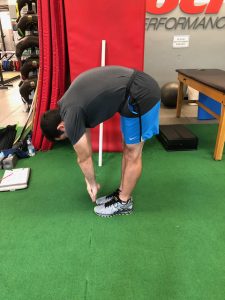
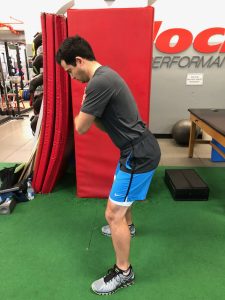
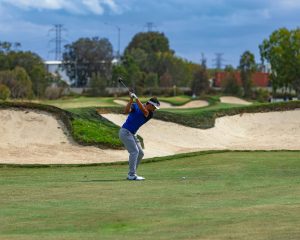
Golfers who can touch their toes tend to set up to the ball with good hip hinge mechanics and a neutral spine (straight line from the top of the shoulder to the tailbone).
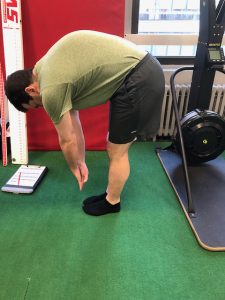
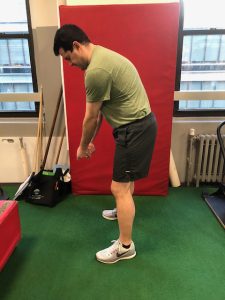
If you can’t we have a problem. An inability to hinge your hips often results in a C-posture at address. As you can see from the images above, this is consistent across the board. The brain will substitute rounding of the upper back for hinging from the hips.
“If you cannot bend or hinge to address the ball, one tends to round the spine as a substitute pattern. When you round you lose rotation of the upper body and since the body will find the path of least resistance, that rotation is often compensated for in the lumbar spine. “__Brett Cohen
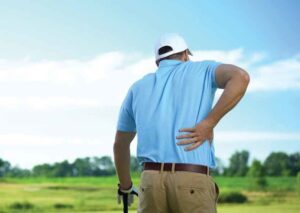
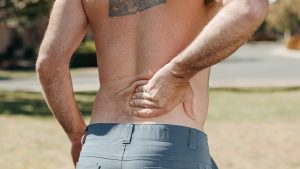
(BACK PAIN)
The Body/Swing Connection:
The Toe Touch Test has a very strong correlation to loss of posture both static and dynamic posture. Loss of posture = Loss of power.
A loss of power is one of the most common complaints I get from golfers who come to me for help.
- “I have wanted to improve my strength and flexibility to increase club head speed for a while now and have finally decided to pull the trigger. The issue is that I tweaked my lower back roughly a month ago and have experienced a decent bit of pain in the 27 holes I have played and in general since then.”
-
“I am looking for a trainer who can help me improve my golf fitness because my left lower back is often injured in sports. I hope to improve my body rotation and flexibility during the full swing to increase driving distance.”
(check out the golfer in this video and how he cannot pass the toe touch test)
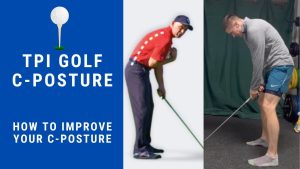
Those who cannot turn will tend to stand up on the way into the backswing position which looks like this:
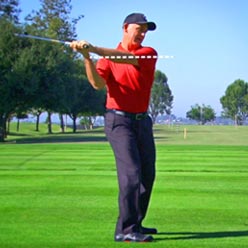
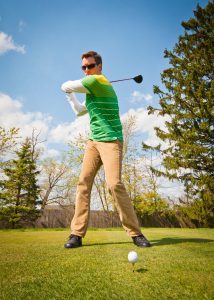
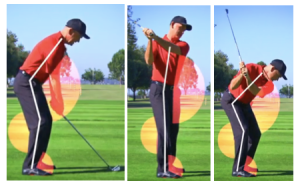
This position is called flat shoulder plane and early extension of the hips during the backswing.
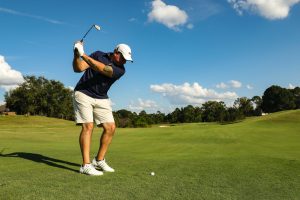

Instead of maintaining a forward flex or bend at the hips while the upper body rotates around it. This allows the golfer to maintain his posture during the first half of the swing and also helps to preserve the lower back as the upper back can rotate more efficiently.
END OF PART 1