

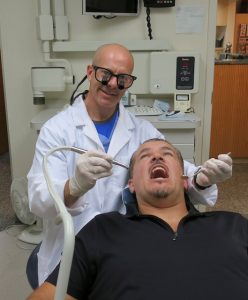
I don’t know about you, but I never had a doctor that looked like this! But that’s not the point of this article, just saying.
What Does A Doctor Do?
Well, all of you have been to a doctor. The first thing they do is have you fill out forms. They want to know your history, your family history. All this information plays a role in what they look for and what your risk factors for disease may be.

The next thing they do is send you for bloodwork to see what your body chemistry is.

Blood work is basically a chemistry test. Depending on what they are testing for, different markers in the blood tell them what they need to know.
*Ah, if I had only passed high school chemistry. I could have been the doctor my mother always dreamed of—or at least a dentist.

If they find your biochemistry off the standard deviation they prescribe a medication that will “balance” out your biochemistry. This is known as allopathic medicine. The medicine treats the symptom but does not address the underlying cause of the deviation or deficiency.

Nevertheless, this style of medicine, also referred to as Western medicine, has its place and is successful in many cases at treating chronic diseases and conditions of disease. It’s basically known as a “this for that” approach to treatment.
Imagine This….
One of the things that makes a doctor a doctor or any other ‘medical profession’ different from the rest of us is that based on their schooling and education they can administer various tests and procedures in order to make a ‘diagnosis’. Only a medical professional can issue a diagnosis.

Sometimes you might require an X-ray or MRI to see internal damage to bones or soft tissue. And then a radiologist would evaluate the images to make a diagnosis.


But what if the doctor didn’t do any tests on you and instead of prescribing a medication known to effectively treat what’s ailing you they said to just take your friends’ medication and see if that works, or offered you a choice of pills and said, “pick one”, “I wish you well.”


What would you think of that doctor? You’d probably go looking for a new one.

Exercise IS Medicine
Now this isn’t news to me. It’s well known that regular exercise is good for your health. This PBS story goes into some recent research that explains just how profound it is for the human body.
If you watch until the end you’ll hear the most common question regarding exercise and that is: “What kind of exercise, how often, does it matter when I do it or how much I do it”?
I got the same question years ago when I worked in a running shoe store in NYC. It was called NY Running Company at Columbus Circle and it was the largest running retail store in New York. It has since been taken over by Fleet Street. We had a wall of shoes. Literally. When a runner would walk in they’d look at the wall and ask me; “what’s the best running shoe you have”?

It’s impossible to answer because the answer is – it depends. I would need to know the following, at a minimum to make a recommendation:
- What is the structure of your foot? Do you have flat feet or a high arch?
- Do you have or have you had any lower limb injuries?
- Where do you run? What is the surface you’re running on?
- Are you training for an event?
- How many miles per week do you plan to run?
- What is your gait cycle like?
- Is your stride neutral or do you overpronate?
The only way to know the answers to these questions is to watch someone run.
- If you are getting a running shoe recommendation based on your footprint – then go to another store that knows what they’re doing.
If exercise is medicine then it needs to be prescribed by someone who studies and understands it. That would be an exercise coach.


Those of you who might be using social media outlets like YouTube or Instagram to look for and find the latest, coolest exercise trends or buying a PDF-based program hoping it will “work” might as well be taking your friends’ medication. Without testing and goal setting, not only will those exercises not fit your needs, but you may even get hurt in the process.


END OF PART 1