
What is FASCIA – Fascia is the connective tissue encompassing our muscles and organs.


Whether it’s the white filmy covering of a chicken breast or the marbling you see in a slab of aged beef, it’s all fascia.
- Fascia covers; muscles, nerves, organs, bones, blood vessels, and individual muscle fibers.
- Strands pass through the muscle like a web and emerge to form tendons that attach to muscles and bones.
Fascia covers AND connects everything to everything else.
“Fascia is a 3-D cobweb that holds everything together.”__Thomas Myers, author of Anatomy Trains

Fascia holds everything together, keeps organs in place, keeps muscles from tearing, and attaches muscles to bones.
Every part of your body is connected to other parts of your body through fascia. It’s how one muscle communicates with another muscle.
“Muscles are the engine of movement, fascia is the medium.”__Thomas Myers
What Is Fascia Made Of?
Fascia is composed mostly of congealed water (70%) and two kinds of protein called collagen and elastin. Since it’s mostly water, it holds water like a sponge.

Have you ever tried to wash something with a dry sponge? It doesn’t go very well!
“You cannot stretch a dry sponge. If you do, it will crack.”
How Fascia Gets Injured
One of the ways fascia can get injured is due to a lack of hydration. Remember, like the rest of your body, fascia is 70% water. When it isn’t sufficiently hydrated the webbing loses its full length-compressing the nerves that innervate the muscle and can lead to muscle weakness, joint pain, numbing, and tingling. This restriction impairs circulation. Impaired circulation leads to inflammation, reduced range of motion, and eventually – pain. Over time, in response to inflammation, the body produces excessive collagen, scar tissue, adhesions, bumps, and lumps – increasing the imbalance between tight/loose muscles.
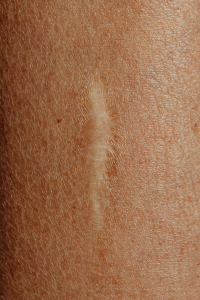
Some other ways fascia gets injured are; overuse, underuse, trauma to the body’s soft tissue, bruising, and surgery. These stressful situations can cause the fascia to “kink” and that stresses fascia loses water, gets clumped, and sticks together, reducing movement capacity.
Have you ever had or heard of plantar fasciitis? If you’ve ever had it it’s painful and, it sucks! The plantar fascia- plantar meaning (bottom of the foot), (itis) meaning inflammation. So plantar fasciitis means, the fascia on the bottom of your foot is inflamed. But since fascia is universal and connects one segment of your body to another, that fascia becomes your Achilles tendon which then becomes your hamstring and so on.

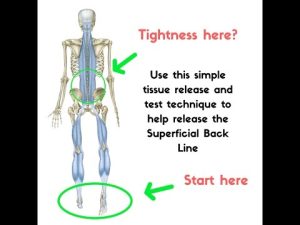
How To Keep Fascia Healthy
“Healthy fascia slides and glides easily on each other, that’s what allows you a full range of movement and easy coordination of movement for whatever motion you are going to do.”__Thomas Myers

Remember, water makes up 70% of your fascia and muscle. If you don’t have enough water in your tissues, you can rest assured that your fascia won’t be healthy.
**You will not be able to improve your flexibility/mobility no matter how much stretching you do if you are not properly hydrated.
Proper hydration is defined as drinking half of your body weight in ounces per day. It’s easy math. If you weigh 200lbs you need to drink 100 oz of water, which is the equivalent of 3 – 1 liter bottles per day.

The next step to keeping the fascia healthy is to massage it. Anyone who’s experienced a deep tissue massage knows that they tell you to drink a lot of water right after and the next day you will notice you are moving better.

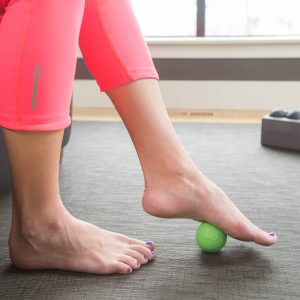

When you get a massage or if you massage your own muscles and fascia (known as self-myofascial release), you are pumping fluid into the body’s soft tissue (muscle and fascia), much like when you walk on the sand near the water line, the pressure of your foot pushes the water out of the sand and as you move off that spot, the water rushes back in.

Self-myofascial release is something I know a fair bit about. Before making golfers my primary focus I worked with runners. Here is a photo of a group of runners I coached and showed how to use SMR to help them stay on the roads and out of rehab.
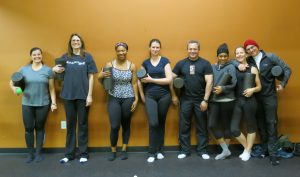
I also did workshops at various Lululemon locations in Manhattan, NYC.


Years later I would learn how to use specific assessments and tools made by RAD to facilitate more mobility in golfers.


Brett’s Bottom Line:
There are three steps in keeping fascia healthy. Those steps are:
- Hydration (drink 1/2 your body weight in ounces/day of water)
- Manipulation (massage/SMR)
- Elongation (stretching)
Part 2 of this article will focus on the third aspect, stretching.
Stay bendy my friends. Roll and stretch every day.