
Quick Rewind

In PART 1, I told you that:
- The main reason you have lost your mobility is that you have stopped using your body the way it was designed to be used a long, long time ago. Even those of you who “exercise” all the time.
- Because the body is a series of interconnected parts, one part will impact the others. This impact can either be positive or negative.
In PART 2, I told you that:
- The body works in an alternating pattern of mobile and stable joints, and we need mobility in the ankles, hips, thoracic spine, shoulders, and wrists.
- I also told you that when a mobile joint loses its ability to move freely in three directions, the brain will borrow mobility from the stable joint either above or below. That leads to problems!
So What Do We Do About It?

When an athlete presents with limited range of motion at a mobile joint, the underlying cause often falls into one of two categories:
- Soft-Tissue-Based Restrictions
- Joint-Based Restrictions
We used to blame “tight muscles” for lack of mobility. But recent research suggests it’s pretty hard to lose muscle flexibility. We are losing the flexibility or elasticity of fascia.
“Brett has done a phenomenal job of improving my “pliability”__that is the intersection of flexibility and mobility for my golf game.”__Jim Forbes

Example:
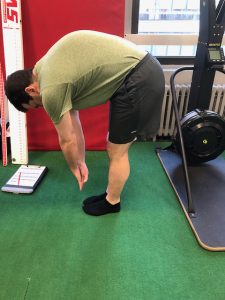
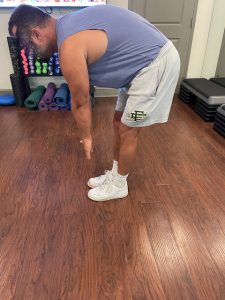
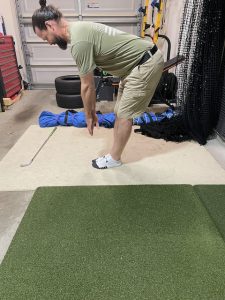
Let’s say someone struggles to touch their toes. I see a lot of that. Yet, many of them tell me they stretch their hamstrings all the time. Hmmmm.

#1: Most of you struggle with flexibility/mobility because the body’s fascia is stiff, underhydrated, and not stretched and challenged enough.
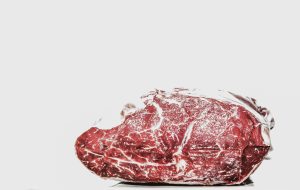
What’s actually tight is fascia.
Fascia is the connective tissue that covers muscles and organs as well as connects them. Fascia is what allows one muscle to communicate with another muscle, and it is the transmitter of forces throughout the body.
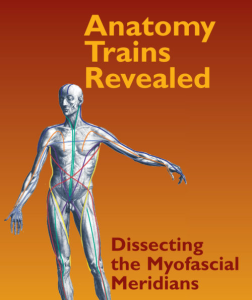
My 4 Step Solution For Improving Fascial Health
- Hydration (since fascia is comprised of mostly water, you need to keep it hydrated by drinking 1/2 of your body weight in ounces of water each day).

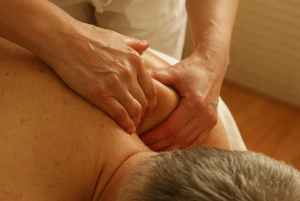
2. Manipulation (massage/self-massage/foam rolling)

3. Elongation (stretching/static/fascial/dynamic)
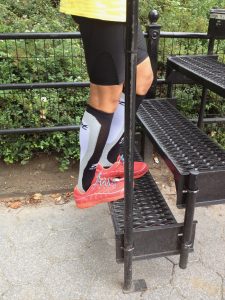


4. Integration (use the new range of motion in a functional standing pattern using multiple joints/preferrably under load)



Now the brain has a reason to use that new range of motion. That’s how fascia is designed to be used; that’s mobility.
 This is not mobility; it’s therapy.
It makes you feel good, but has no carryover to function.

The brain controls all movement. Not his brain, your brain.
In PART 4, I will be covering Joint-Based Restrictions. See you over there.