
The number one complaint I get from golfers is that their bodies don’t move the way they need to – to play golf the way they want to. In other words, DUDE-you’re stiff!
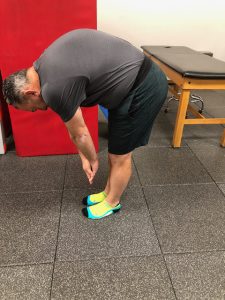
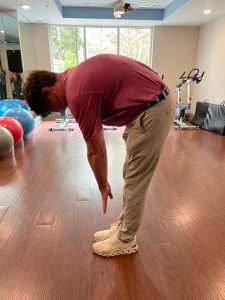
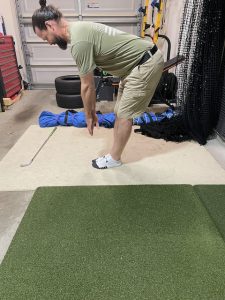
What golfers say to me is, “I need more flexibility for golf.” This is true, they do! But what they don’t know is the difference between flexibility and mobility, and how they work together to help you move into the positions you want to.

There are a lot of misconceptions about golf fitness. And one of the major ones is this.
I stretch, or I get stretched, therefore I should be “flexible“. Not at all true.
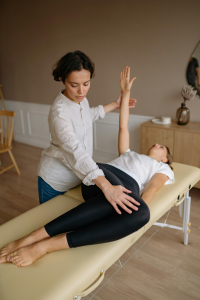
I can’t tell you how many golfers I’ve worked with that have gone or do go to “stretch specialists“, yet still struggle getting the positions they want for golf. The reality is, mobility is NOT created by stretching alone. AND….poor mobility can (and most likely will) promote swing compensations, and those swing compensations will result in frustration and, over time, may even lead to pain or injury.
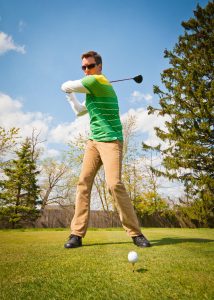
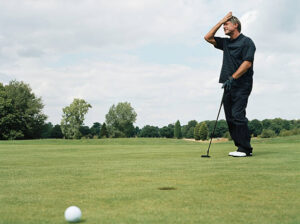

Remember, mobility problems will lead to compensations in your swing, which will lead to poor performance and injuries.

OK, Brett, then what the heck is mobility, and where do I need it? I want to make this complicated concept and make very simple to understand.
Mobility is having an adequate range of motion at various joints or segments in the body (see diagram below) AND…being able to control those joints under different loads and speeds.
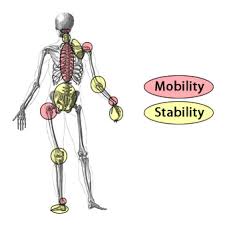
How do I know if you need mobility at a particular joint or segment? I test you. That’s one of the major things I’m looking for when doing the TPI Level 1 Screen. How do your mobile joints move?
Guys, here’s the harsh reality. Most of you are going to fail all of the mobility screens. Sorry, it’s just a fact. How do I know? I’ve done hundreds and hundreds of these screens over the past 15.5 years, and after a while, you see patterns.
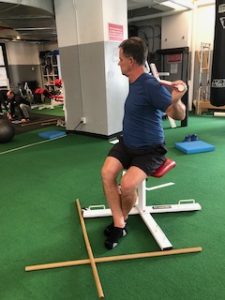
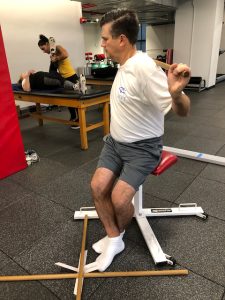
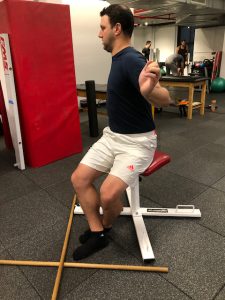
Remember, the reason you contacted me is that you don’t move well.
What Controls Movement?
Mobility results from the integration and movement of muscles, bones, joints, and connective tissue – all controlled by the neurological system (The Brain, Spinal Cord, and the rest of the Nervous System).
So, in language that makes sense to golfers, it’s an ACTIVE RANGE OF MOTION (you can control). If you can’t control it, you don’t have it.

Flexibility: How far a muscle group or joint can be taken through its range of motion by a force acting upon it. This is known as PASSIVE RANGE OF MOTION.
Remember this photo of someone getting their chest stretched? If someone stretched you like this, would it help you get into a better backswing position? Answer: NO (unless you follow this up with something the nervous system can use).
Passive stretching, on its own, is incomplete. It creates a temporary range of motion that, without a sufficient amount of stability and strength to control and support it, will only leave you back where you started in a short period of time.
The 5 Phase Mobility Continuum
Phase 1: Roll it
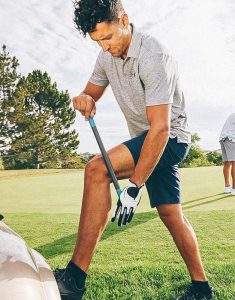
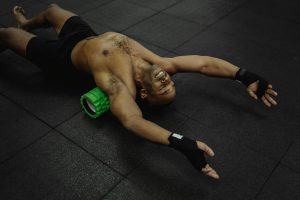

This step helps to hydrate the muscles and fascia of the body and relax the nervous system, which gives us the perfect window for Phase 2.
Phase 2: Stretch it
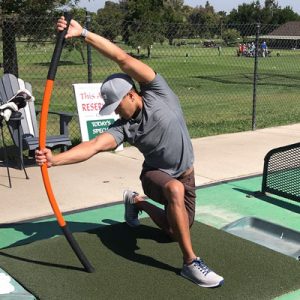
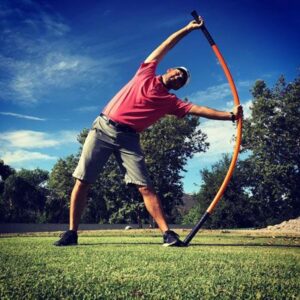
I didn’t say you don’t need to stretch. I said that stretching alone or being stretched will not solve your mobility problems.
Phase 3: Distract it

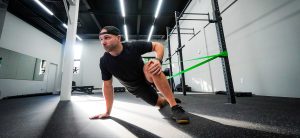
(upper body shoulder distraction) (lower body hip distraction)
In Phase 3, we are going to apply a mechanical force (such as the strength bands you see in these photos) to help create more usable space in the joint or segment.
Phase 4: Assist it
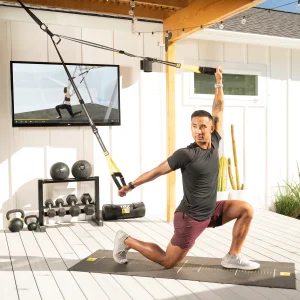
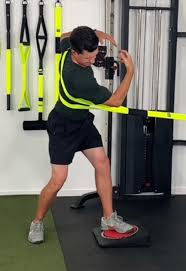
(TRX) (Whatsthatstrap)
In this phase, we are going to use a tool or device to assist the body in getting to the desired range of motion. This is akin to the passive stretching example. Meaning, if you’re getting help, you don’t own the range of motion. Wait, we have one more Phase.
Phase 5: Resist it
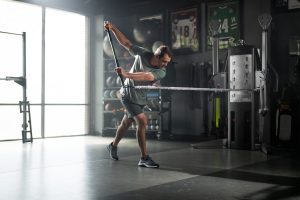
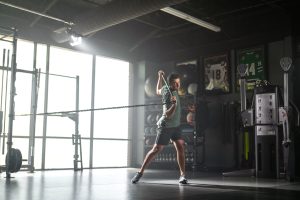
In the final phase, we are going to work against resistance (cable, band, tubing) to try to get back to positon we achieved in the previous phase. This will give the brain the confidence to know it’s safe to go there.

Now, this has to be done for all of the mobile joints and segments seen in the diagram below:
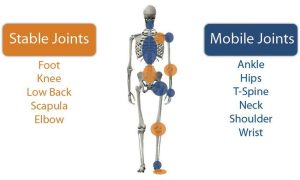
- ankles
- hips
- thoracic spine
- shoulders
- upper cervical spine
- wrists
AND, you need to be able to control all of those joints in unison in each part of the golf swing:
- address position
- halfway to the top of your backswing
- the top of your backswing
- from the top of your backswing to impact
- from impact to the finish

Looks like we made it.
So, would you like some help with that?
Brett’s Bottom Line:
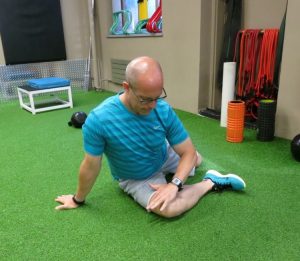
Men of a certain age (and I’m one of them) always feel stiff.
- Spend too much time sitting (stiff)
- Play too much golf (stiff)
- Lift heavy weights (stiff)
- Run far or fast (stiff)
- Play Pickleball (stiff)
- Get out of bed in the morning (stiff)
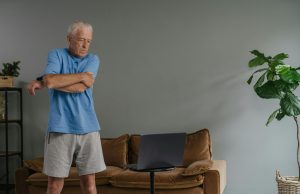
You’re damned if you do, and you’re damned if you don’t, so you might as well learn to help yourself feel human again, and while you’re at it, become a better golfer.

Now wouldn’t that be nice?
If you would like help putting together a game plan to become less stiff in 2026, send me a note. Let’s get started. Spring will be here sooner than you think.
Here’s what others are saying:
“Brett has done a phenomenal job improving my ‘pliability’. That is the intersection of flexibility and mobility for my golf game. He provides not only in-person workouts, but also designs custom workouts for each players needs from the TPI Website.” __Jim F.

See a partial screen in action.