

Spring officially arrived on March 20th. And if you have seasonal allergies as I do, or you’re a baseball fan, you know Spring has sprung! And while scenes like the one above are breathtakingly beautiful, for many of us, they cause issues like sneezing, itchy, watery eyes, and a stuffy nose, making it hard to breathe. That’s the dichotomy of spring.

For many of you golfers out there, spring golf can do the same.

It’s finally warm enough to get out there and play regularly, but you’re still struggling with the same issues as last season, and to add insult to injury, you’re a bit rusty, too.
Why You Struggle
Many of you have taken lessons or purchased new equipment, all in hopes of finally conquering that slice, or some other swing fault you’d like to live without.



Maybe you’re getting good advice from your coach, but the same issues keep coming back.
Why?
“Because your body doesn’t move the way it needs to, to play golf the way you want to.”__Brett Cohen, TPI Certified Golf Fitness Expert

Most often, the problem isn’t the instruction you’re getting or the equipment you use; it’s you, the person who swings the club. Don’t believe me? Take it from Scottie Sheffler.
“The reason most amateur golfers struggle with their swing is because their bodies physically can’t move the way they’re supposed to – to hit a golf ball. They will see some extreme gains just from moving their body better.”__Scottie Sheffler
Golf Is Hard!
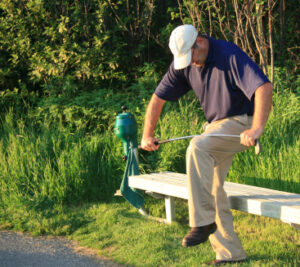
Yes, golf is hard, and it’s even harder when your own body gets in the way.
- If you’re not happy with your driving distance.
- If you’re not happy with your swing’s consistency.
- If your body aches after a weekend of golf.
I CAN HELP!

If these issues persist, no matter how many lessons you take or how many balls you hit at the range, these same issues keep coming back, dude, it’s you.
These are all signs you can use a different kind of help.
Your swing, anybody’s swing for that matter, is a reflection of what it is you are capable of doing physically.
Every physical limitation creates a movement compensation. And EVERYONE has them, even the best of the best.
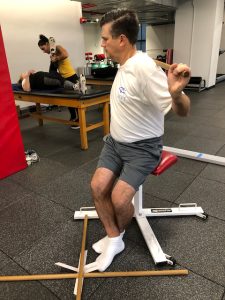

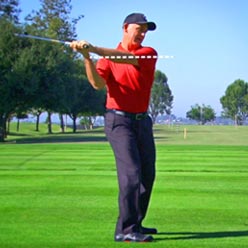
This is true, not just for you, but for some of the best players in the world, including former U.S. Open winner Wyndham Clark (watch the video below)
While Wyndham moves a lot better than most of you, he still has restrictions that are negatively impacting his swing.
What Your Swing Coach Isn’t Looking For
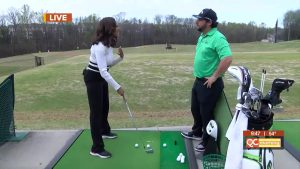
Unless your swing coach is TPI Certified and screens you before you start your lessons, they are just guessing their way around your swing faults.
Example.: They are telling you to rotate more in your backswing, load your trail hip, and get your arms up. Well, hell, yeah, that would be nice.

But if you can’t physically do that, what are you doing there? Getting frustrated and wasting time, that’s what.
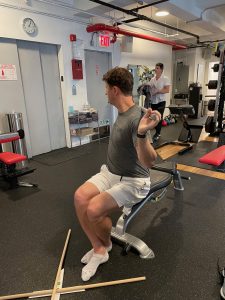
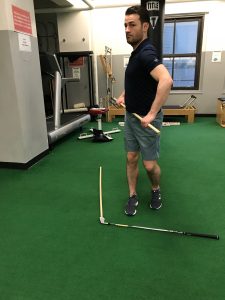
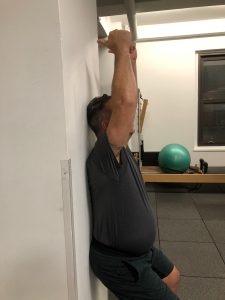
Without a structured physical evaluation, your Swing Coach is forced to guess their way through your swing faults. Even the best PGA Professionals can’t see what your joints and muscles are capable of.
Here’s a common thing I’ll hear from amateur golfers:
“Hello, I am struggling being consistent with my driver. When I hit it well, I get about 250 yards out of it. But I’m fighting a slice.”
Hell, I’m not saying that a GOOD golf lesson can’t be of help here. There are definitely nuances to swinging a golf club that only a good golf coach can pick up and help you with. Watch the lesson below, you’ll see what I mean.
OK, What’s The Point?
If you are getting good lessons and you’ve been fitted for clubs and you’re STILL struggling, well, what does that tell you? It tells us that your body is getting in the way.
How will you know for sure? Assess, don’t guess.
That’s the whole purpose of the TPI Level 1 Screen. It tells us what you can or cannot do in relation to what is required of a mechanically correct golf swing. Watch part of one below. I assure you, most, if not all of you, cannot do this.
Do you have any physical limitations that are affecting your golf swing? YES, everybody does.
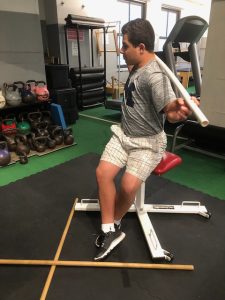
Wouldn’t you want your instructor to know what it is you are physically capable of, so that when you start your lesson(s), he or she knows if your golf swing is the way it is because of the way your body is moving, or if you are struggling with something because of the way your body is moving, and it’s not just a concept issue?
When your body affects your swing pattern, those of us educated by the Titleist Performance Institute call that a Body-Swing Connection.
If you don’t know what your Body-Swing Connections are, you and your teacher just might be trying to make a change that can’t happen, because your body just won’t cooperate. That is going to be very frustrating and very expensive.

Let’s find out what your body needs so you can play your best golf. Just leave me a message in the intake box and say, “Improve My Game”. I’ll know what you’re talking about.