

In PART 1 of this article series, I made you aware of the high incidence of injury amongst those training for endurance events like half and whole marathons. If the injury percentage of those taking on an endurance training program is 60% or more, clearly, there’s a problem!
“Talk to a runner, I guarantee that within 30 seconds, the conversation turns to injury.”__Christopher McDougall-Author of Born to Run

In PART 1, I also made you aware that the Number 1 predictor of injuries in runners is previous injury.

In PART 2 of this article series, I pointed out that the Number 2 and Number 3 predictors of injuries in runners are:
- Structural inefficiencies (your body is just not well-suited for long-distance running)
- Muscle imbalances (postural distortions)

HOW DO WE BREAK THE INJURY CYCLE?
The injury cycle is simple. Take someone not structurally designed for endurance sports, add muscle imbalances and joint deficiencies from sitting behind a desk for decades, add running shoes that create and support physical dysfunction, layer on a lot of volume of the same movement pattern over time, and it’s no wonder most of you will get hurt.

Structural deficiencies + Muscle imbalances + High Volume = Injury

Here’s the cycle. Train until you get hurt, rest, get treatment, and repeat. It’s why the removal of pain is seen as the solution. Just because the pain is gone doesn’t mean the system is ready to go. Pain is the result of something being wrong.
If the service engine light comes on on your dashboard and you ignore it, the car will eventually stop moving! In this analogy, PAIN is the same thing as the IDIOT light that comes on your dashboard when you’re about to run out of oil in the engine. If you ignore “it”, “it” doesn’t magically go away. “It” comes back to bite you in your _ss. Not a matter of IF, it’s a matter of WHEN!


The injuries runners face develop over time and are usually a result of dysfunction in the body far away from the site of pain.
If you continue to push through pain, your body will break down. These are the injuries most common to runners:
- Plantar Fasciitis
- Achilles Tendonitis
- Shin Splints
- Runner’s Knee
- IT Band Syndrome

HOW TO AVOID THE INJURIES MOST COMMON TO RUNNERS
The first step in avoiding training-related injuries is to UNDERSTAND YOUR RISK. Sounds so simple, yet I’ve never met a runner who told me they did this before embarking on a half- or full-marathon training program.
We all know that screening and testing are crucial in detecting diseases. Well, the same goes for exercise-induced injuries.
Injury reduction begins with knowing how susceptible you are to injury in the first place. The only way to know that is to get screened or tested. A screen helps identify potential cause-and-effect relationships between micro-trauma and chronic injuries in relation to physical asymmetries.
KNOW BEFORE YOU GO

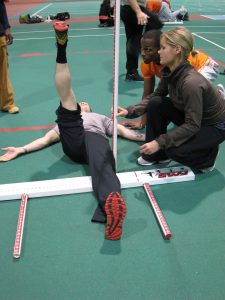
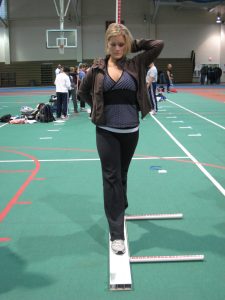
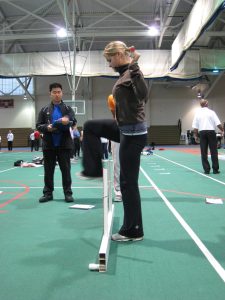
The FMS (Functional Movement Screen) checks the “vital signs” of movement. The first step in someone’s program should be to measure if the body can move efficiently or not. The FMS identifies your INJURY RISK POTENTIAL. The physical screen becomes the predictor of future complaints as well as injuries.
In 2007, I took an AMTRAK train from NY Penn Station to Boston. Over the course of a weekend, I was one of the first trainers in NYC to receive direct training from Gray Cook, one of the screen creators.
Gray also happens to be on the advisory board of The Titleist Performance Institute.
In the FMS, we measure 7 different movement patterns. Five of those seven are unilateral. Meaning, we measure both the left and right sides of the body. This has a huge correlation to running because running takes place on one leg at a time. It’s a single-leg balance exercise with a controlled fall forward, done thousands of times over and over.

MOVEMENT PATTERN DEFICIENCY CORRELATES WITH RISK OF INJURY
The best way to reduce your injury risk potential is to use a physical screening process that helps to identify how susceptible you are to injury in the first place. Using a movement screen helps to determine weak links in an athlete’s body by gauging and assessing human movement patterns: simply, watching how well you move. The screen becomes a predictor of future injuries as well as a confirmation of current complaints.
If a runner struggles with ankle and hip mobility, as well as single stability and balance, what do you think will happen when we add volume and intensity to that frame?
Let’s say you have a car that’s been around for a while, it’s been in a fender bender or two, you put on some new tires, decide to put in a more powerful engine, and take it on a cross-country trip. Well, you’d better have AAA because that old jalopy with a crooked frame and new tires is only going to take you so far before you have to have it towed to the garage on a flatbed.

Yet, this is what runners are essentially doing all the time. Taking their less-than-optimal frame to the running store for a new pair of shoes (tires) and adding lots of mileage in hopes that they don’t end up on the top of a flatbed.