
In the 1993 classic romantic comedy, Groundhog Day, starring Bill Murray and Andie MacDowell, at approximately 7 minutes into the film, just after they get out of the news van in Punxsutawney and are about to check into their prospective hotels, Rita says to Phil, “Is there anything I can do”? and Phil responds, “Would you help me with my pelvic tilt?”
I have no idea if that’s a Bill Murray ad-lib or was written in the script, nor do I know what the intention of the line was, but the Pelvic Tilt is an essential movement to good golf, and we all know Bill Murray’s relationship with golf and gophers.
So what exactly is a Pelvic Tilt, and why is it so important to golf?
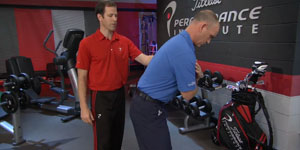
TPI Fitness Professionals test your ability to tilt and tuck your pelvis in the Level 1 Screen.

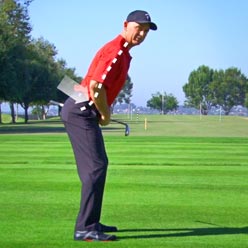
Before I ever ask you to move your pelvis, I am going to ask you to assume your static mid-iron posture. I’m hoping it looks like this.
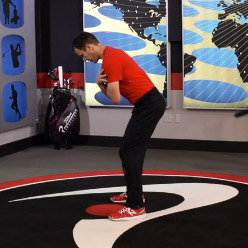
Meaning your spine looks like a straight line. Like the letter “I”. See my recent article. Find Neutral Spine for more on that.
More often than not, I’m going to see address positions like the ones below. The most common one is the rounded upper spine, or “C” posture.
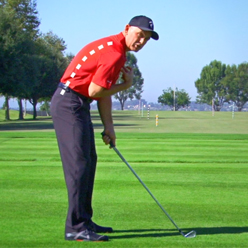
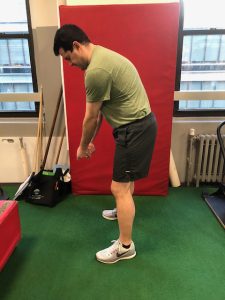
Found less frequency, but still a big problem if you want to avoid back pain, is the “S” posture.
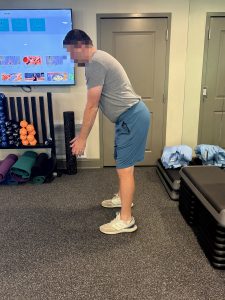
If you set up with either “C” or “S” posture and I ask you to tilt your pelvis forward, as if you were pouring water out of a pitcher, and then tilt it backward, as if you were putting the water back into the pitcher, you will likely struggle mightily.

To do so requires the following:
: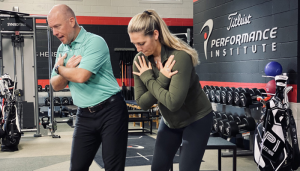
- spinal mobility
- core strength
Let me unravel that for you.
When I say spinal mobility, I mean the ability to take your spine from full flexion to full extension, from the tailbone to the base of the neck.

Full spinal flexion, or multi-segmental flexion, looks like these photos below. Uniform curvature of the spine. Toe touch with straight knees.
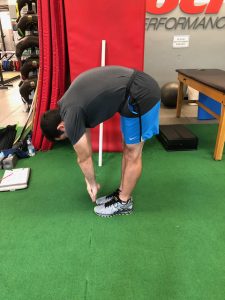
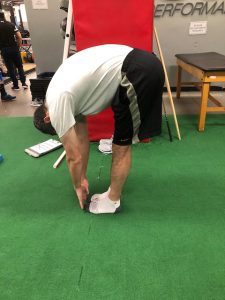
Most of you cannot do this.
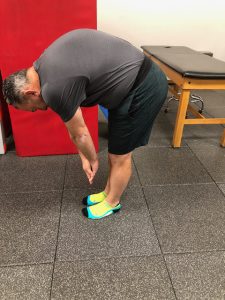
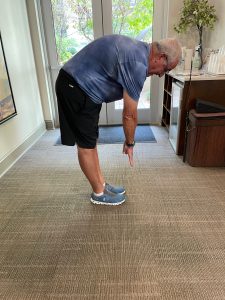
Full spinal extension, or multi-segmental extension, looks like this. Notice the uniformity of the curve of the spine and range of motion.

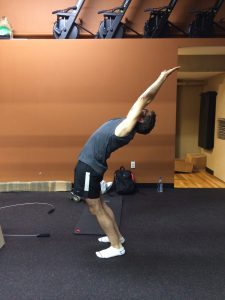
When asked to do this, most of you will look like the golfers in the photos below. The bend is coming from the lower portion of the spine (lumbar spine) and not from the hips or upper back (thoracic spine).
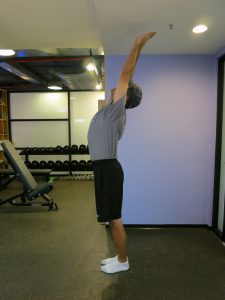
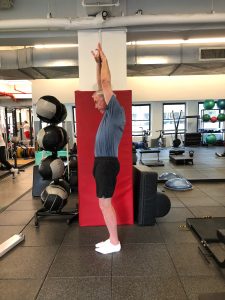
This is a recipe for back pain if you play golf enough.

What About Core Strength?
To make this short and simple, this means you have to be able to activate your glutes and abs. And again, most of you will struggle.



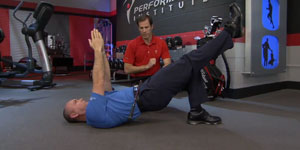
If you struggle with either spinal mobility or core strength, you might not be able to move the pelvis independently from the upper body at all, OR it might be limited, and you will shake while doing it, as you will see both Piers and Andy of Me and My Golf demonstrate at 11 minutes into the video below.
What Happens If I Struggle With Pelvic Tilt?
- You might just stand up in the backswing because you cannot keep your lower body connected to your upper body.
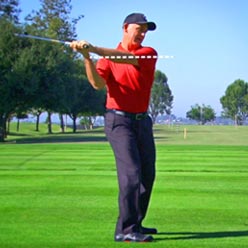
The correct downswing sequence from the top of the backswing to impact is: Lower Body, Trunk, Arms, then club. If you cannot tuck the pelvis under at speed, you will not be able to do this, and as a result, the upper body will dominate the downswing.
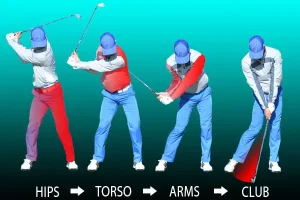
2. If the upper body dominates the downswing sequence, we see things like casting.

2. If the upper body dominates the downswing sequence, we may see over-the-top.
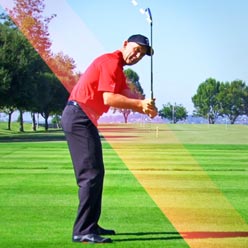
3. If you cannot tuck the pelvis under as you move towards impact and maintain space between you and the ball, we may see the hips go forward towards the ball before impact, which is called Early Extension.
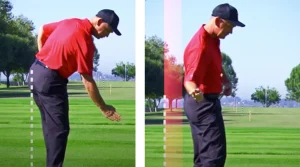

Any or all of these things may occur simply because you cannot pelvic tilt.



Additionally, it’s this tucking under of the pelvis that transfers energy from the ground, through the legs, and into the torso and so on.
So, if you are complaining about consistency (a path and plane problem), or a loss of power (a downswing sequence problem), then this test just might reveal why.
Brett’s Bottom Line:

Every great rotational athlete can control pelvic tilt at speed, whether you are looking for it or not. It’s how baseball players hit home runs, how tennis players serve, how pole vaulters get over the bar.
“Would you help me with my pelvic tilt”? __ Yes, yes, I will.