
In PART 1, I covered three basic training principles you should follow if you want to be an injury-free runner.
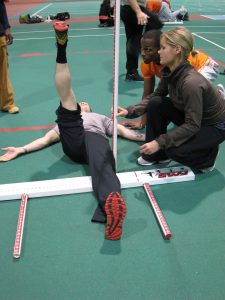
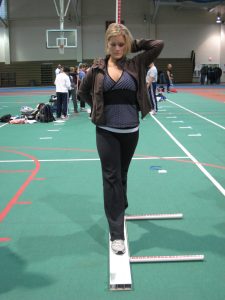
- Understand Your Risk (we do that with a Functional Movement Screen, amongst others)
- Know Your Limits (please, please, don’t run multiple races in one day or one weekend. AND, give your body time to recover after hard workouts or long races).
- Periodize Your Training (take at least 1 day of rest for every mile after a half or whole marathon before you start pounding the pavement again. And, there are times of the year when there are fewer races on the calendar, such as summer and winter. Use those periods to get some quality functional strength training in while reducing mileage.)
RACE

Before and after every race, you should perform self-myofacial release techniques. Commonly called “foam rolling”. I recommend using a massage stick to not only prepare the muscles and fascia, but to excite the nervous system that it’s go time. Here’s a simple routine that takes about 5 minutes I have been using for nearly 20 years.
SMR techniques Improve Tissue Quality.
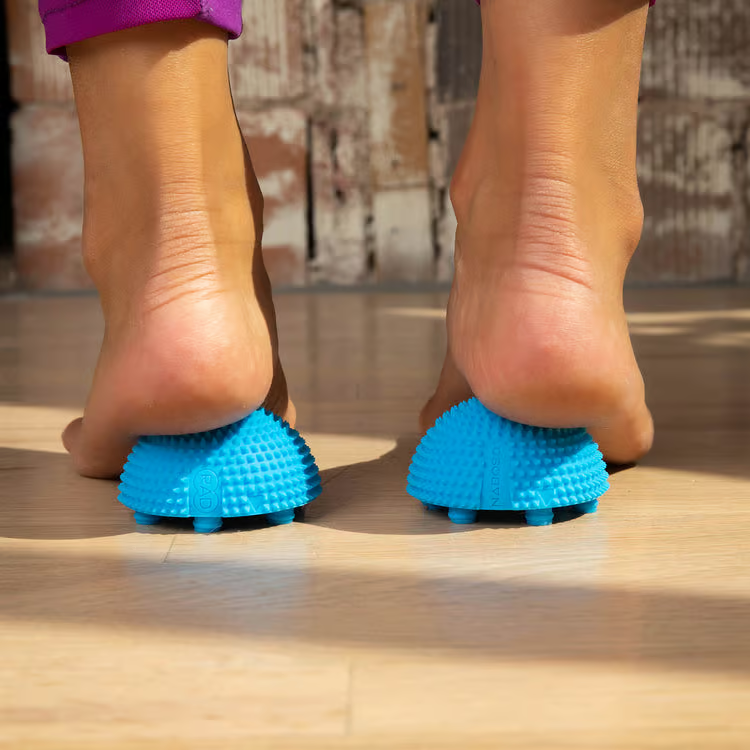
The tissue I’m speaking of is your muscle and fascia. We all know what a muscle is, but not very many runners can define fascia and understand the importance of keeping it healthy.

According to Thomas Myers, Author of Anatomy Trains, “Muscles are the engine of movement, fascia is the medium of movement.” “
“Think of fascia as the inner skin of the body,” says Guy Voyer, world-renowned osteopath.
“Fascia is the 3D cobweb that holds everything together”–Thomas Myers.

Muscle and fascia don’t just get short; they also get dense. Dense tissue indicates adhesions, knots, or trigger points in the connective tissue beneath the skin. These adhesions cause soreness, restrict fluid movement throughout the body, and can cause pain. By applying pressure with tools such as foam rollers, massage sticks, and balls, you will soften and lengthen the fascia, break down scar tissue, improve flexibility and joint range of motion, and allow your body to recover more quickly.
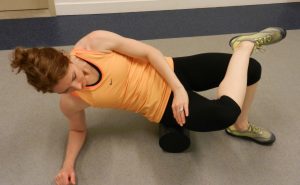
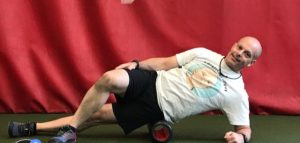
I have been teaching runners how to perform SMR for a very long time.
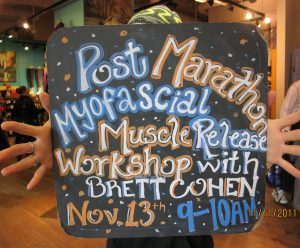
Endurance athletes tend to avoid self-care strategies such as foam rolling and stretching, and instead opt to do the same run again and again. They call it “junk miles” or “recovery runs”. But most endurance athlete’s bodies are a mess of trigger points, and overuse injuries that are just waiting to rear their ugly head.
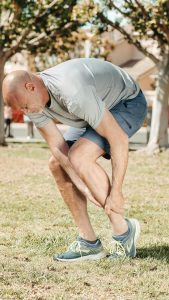
Regular soft-tissue work followed by regular stretching would be time much better spent than logging more and more miles. Every injured runner I have rehabilitated had poor tissue quality.
One of the most important things you can do to reduce your injury risk potential as a runner is to regularly perform myofascial release. Think of it the same way you do taking care of your teeth. Floss (roll) and brush (stretch). DO IT DAILY…

Prepare to Perform -Pre-Run Stretching

Whenever I’ve asked a runner if they stretch before they run, they look at me as if I’m speaking in a foreign tongue. And when I do get someone who says they stretch, they are usually using a less-than-optimal method.
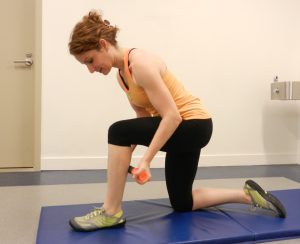
 (This is what runners who don’t know what they’re doing do)
The best way to stretch before activity is with ‘active-stretching’. In active-stretching, you are stretching multiple muscle groups over multiple joints in movement patterns for short periods of time, just a few seconds. Active stretching also lengthens fascial trains and helps to improve joint range of motion, as well as preparing the nervous system for activity.
 (This is what runners who do know what they’re doing do)
In contrast, static stretching isolates individual muscles and holds that muscle for an extended period of time. When the stretch is released, the nervous system will not know how to integrate the new length into movement patterns.
The reality is that static stretching is a poor way to warm up before exercise, and an active stretch routine is superior. I have created a series of 5 stretches in my Ready to Run program that, once learned, takes only 5 minutes to perform. Do these regularly, and you are a step further way from injury.

End of PART 2 – See you in PART 3